Last updated November 25, 2026

Free roof inspection with deck photos before we talk money - GAF and Owens Corning certified installation
Seasonal Roofing Care for Folsom: Year-Round Homeowner’s Guide
Most roof care advice assumes four neat seasons and a wet winter that arrives on schedule. Folsom doesn’t work that way. Here, the roof’s hardest month is usually August, not January. Summer heat above 100°F works fasteners loose and opens seams on roofs that looked fine in May, and the damage shows up months later when the first atmospheric river rolls through. Folsom homeowners who only think about their roof in winter are protecting it during its easiest season. This guide walks through what your roof actually needs in each part of the year, from thermal cycling checks in July to moss assessment in March, and the one task almost everyone skips until water is coming through the ceiling.
Quick Answer
Seasonal roof maintenance in Folsom means inspecting for heat-driven damage in summer, clearing oak and pine debris in fall, checking flashing and drainage ahead of winter storms, and assessing moss and lichen in spring before it spreads. The highest-value habit is a brief inspection each season rather than a single annual check, because Folsom’s heat and wet season stress different parts of the roof at different times. Ridge cap inspection is the task most Folsom homeowners skip, and it’s the one that most often leads to interior water damage.
Styles & brands we work with
- Architectural shingles
- Metal roofing
- Tile roofing
- GAF
- Owens Corning
- Flat & low-slope
Table of Contents
- Summer Roof Maintenance in Folsom: Managing Thermal Cycling
- Fall: Clearing Oak and Pine Debris Without Damaging the Roof
- Winter: Flashing and Drainage Before the Atmospheric Rivers
- Spring: Moss and Lichen Assessment Before It Turns Structural
- The Ridge Cap Inspection Nobody Does
- How Your Roofing Material Changes the Seasonal Checklist
- A Simple Seasonal Roof Care Calendar for Folsom
- Common Mistakes to Avoid
- When to Call a Professional
- Frequently Asked Questions
Summer Roof Maintenance in Folsom: Managing Thermal Cycling
Folsom summers regularly push past 95°F and often past 105°F. Roof surfaces in direct sun run hotter than the air temperature, and they cool off sharply after sunset. That daily swing is thermal cycling, and it’s the main reason roofs in Folsom fail between May and September.
What thermal cycling does is physical. Materials expand in the heat and contract overnight. Over a full summer that adds up to hundreds of cycles. Fasteners back out slightly. Sealant at seams and penetrations softens. On tile roofs, individual tiles shift and crack; on metal roofs, panels expand and the screws holding them can loosen at the washer. A roof that passed a spring inspection can have open seams by August without anyone noticing.
During the 95°F to 105°F window, these are the inspection points that matter most in Folsom:
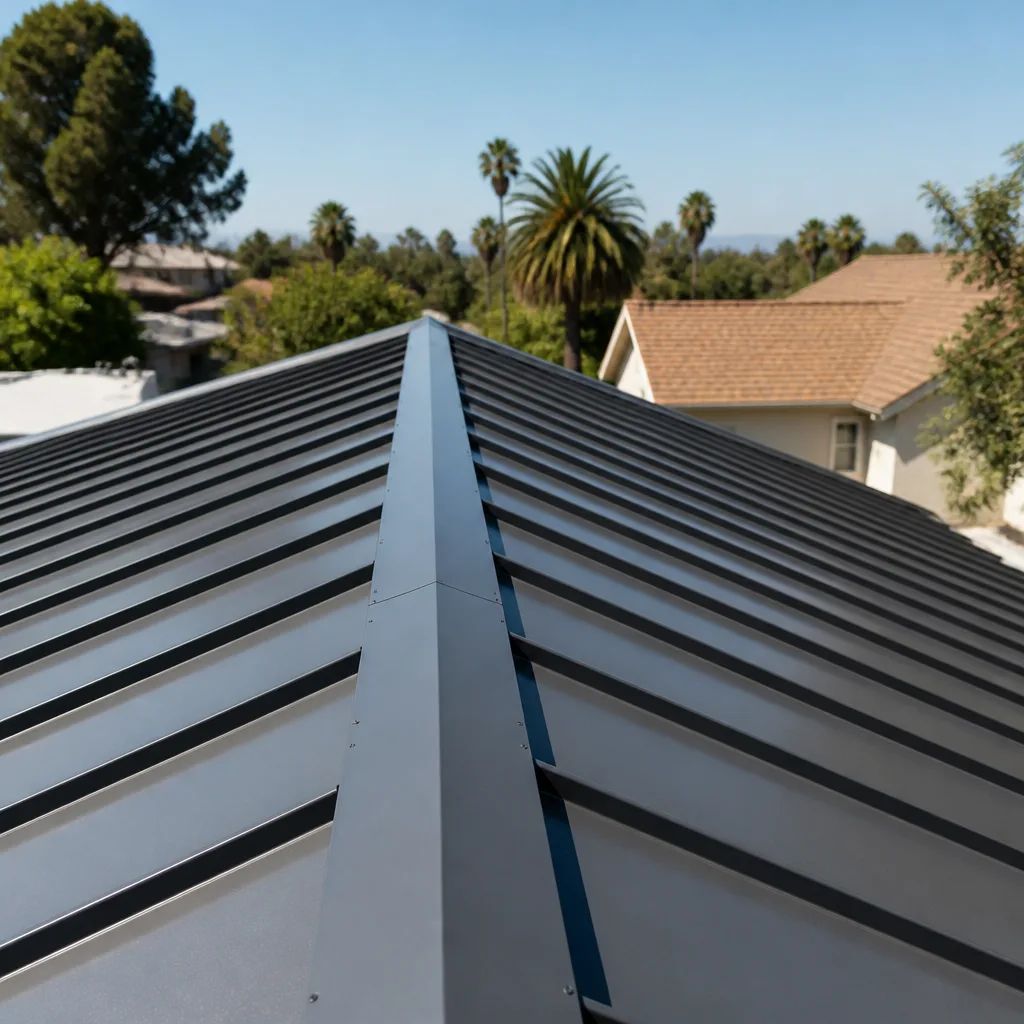
- Fastener lines on metal roofs: look for backed-out screws and compressed or deteriorated washers along the panel seams.
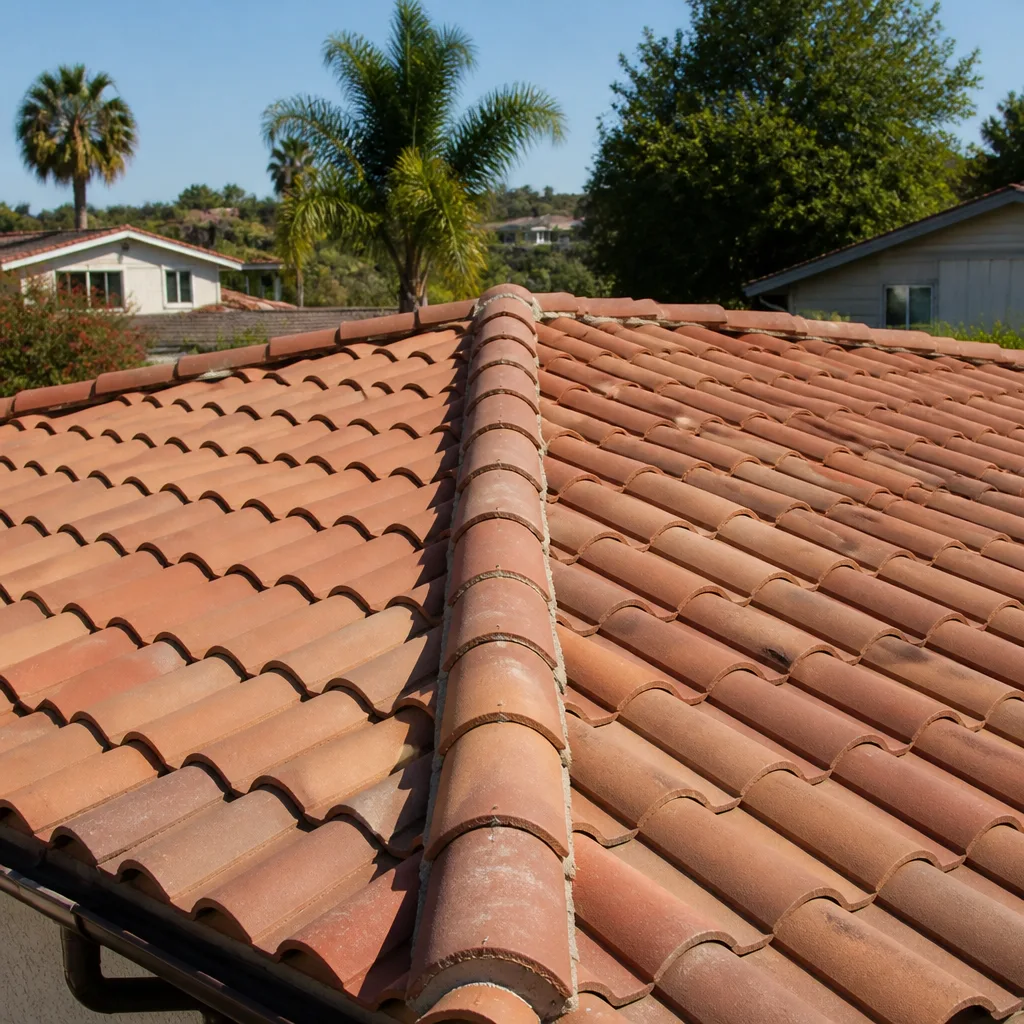
- Tile field and hips: look for cracked, slipped, or lifted tiles, which expose the underlayment to UV.
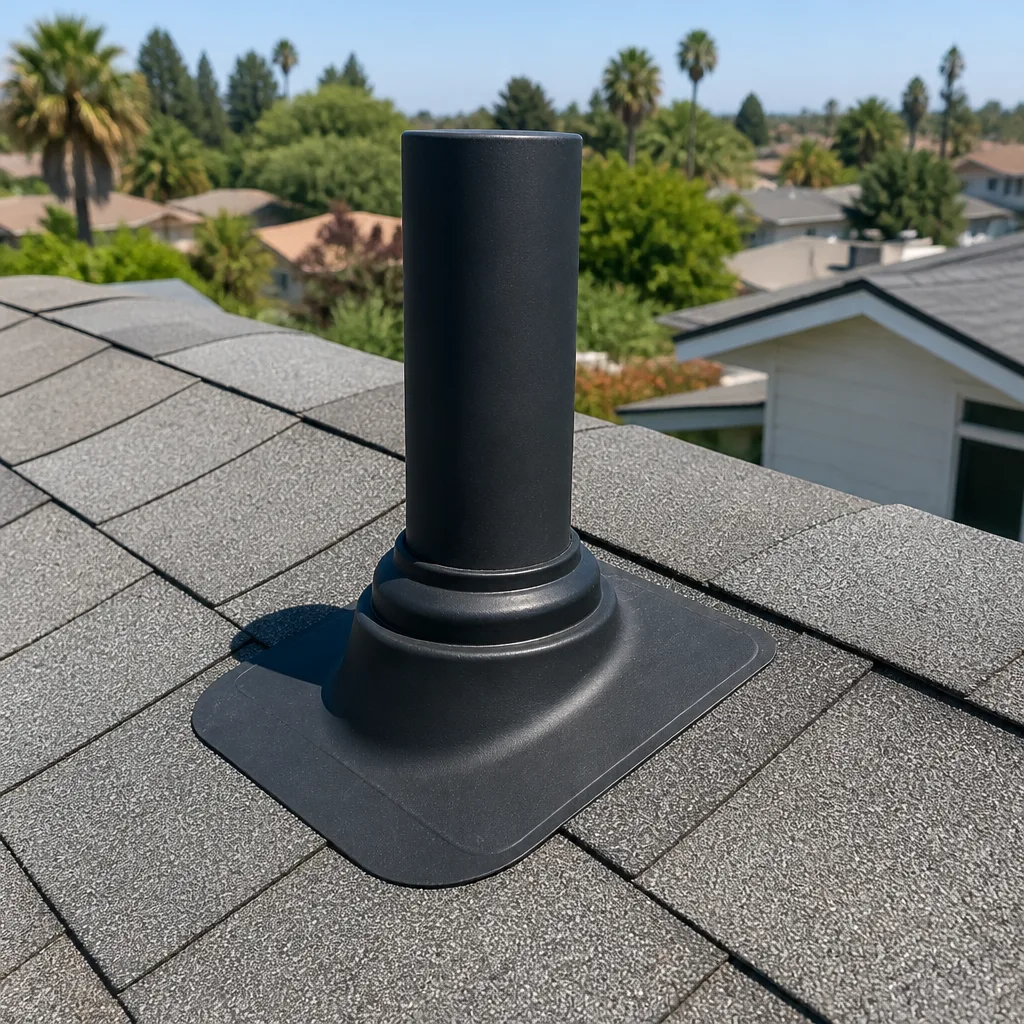
- Sealant at penetrations: vents, pipe boots, and skylight edges where sealant dries out and cracks in sustained heat.
- Ridge and hip lines: the transition points where expansion stress concentrates.
- Flashing at walls and valleys: metal flashing expands differently than roofing, and the gap opens over time.
Our technicians have up to 10 years of experience, and the pattern they see in Folsom is consistent: heat damage hides until the first rain. Catching it in July or August, while the weather is still dry, is almost always cheaper than catching it in December. If you’d like a second set of eyes on a roof you suspect has been through a hard summer, we can take a look. Call (279) 321-0981. We answer 24/7. Fast dispatch from 7am to 7pm, Sunday through Friday.
Fall: Clearing Oak and Pine Debris Without Damaging the Roof
Fall in Folsom brings a debris load that surprises people who moved here from places with fewer trees. Valley oaks drop leaves and small twigs over a long window, and pines shed needles that mat together and hold moisture. The mistake isn’t failing to clear them. It’s clearing them with the wrong tool and scuffing the roof in the process.
Here’s what we mean. Granular asphalt shingles lose their protective surface when someone walks on them with work boots or drags a blower nozzle across the field. Tile cracks under a misplaced foot. Metal panels dent and the finish scratches. The debris is the reason you go up, but the damage you cause getting it off can be worse than the debris itself.
A safer fall routine for Folsom homeowners:
- Start at the ground. Use binoculars to check the roof field, valleys, and ridge from a ladder or from the yard. You can see most of what matters without stepping on the roof.
- Clear gutters and downspouts first. Oak leaves and pine needles are the two biggest causes of blocked drainage in Folsom, and blocked drainage is what turns debris into water damage.
- Remove debris from valleys with a soft-bristle tool or by hand. Valleys are where leaves collect and where water concentrates. Don’t use a pressure washer here; it drives water under the shingle courses.
- Check the roof surface for dark patches where needles have been sitting. Those areas stay wet longer and are the first places moss starts.
- Don’t walk the roof if it’s already showing wear. If granules are thin or tiles are loose, the walk is riskier than the cleanup.
Branches near the roof deserve a mention. In Folsom, oak limbs that overhang a roof drop debris onto the same spot year after year. Trimming them back reduces the load. That’s an arborist’s job, not a roofer’s, but the timing matters. Get limbs trimmed before the leaves drop, not after.
Winter: Flashing and Drainage Before the Atmospheric Rivers
Folsom’s wet season arrives in concentrated bursts, and atmospheric river events can drop a large share of the annual rain in a few days. That’s a different challenge than the steady drizzle of coastal California or the snow load of the mountains. Roofs here face long dry spells followed by intense, short-duration rain that finds every weak point at once.
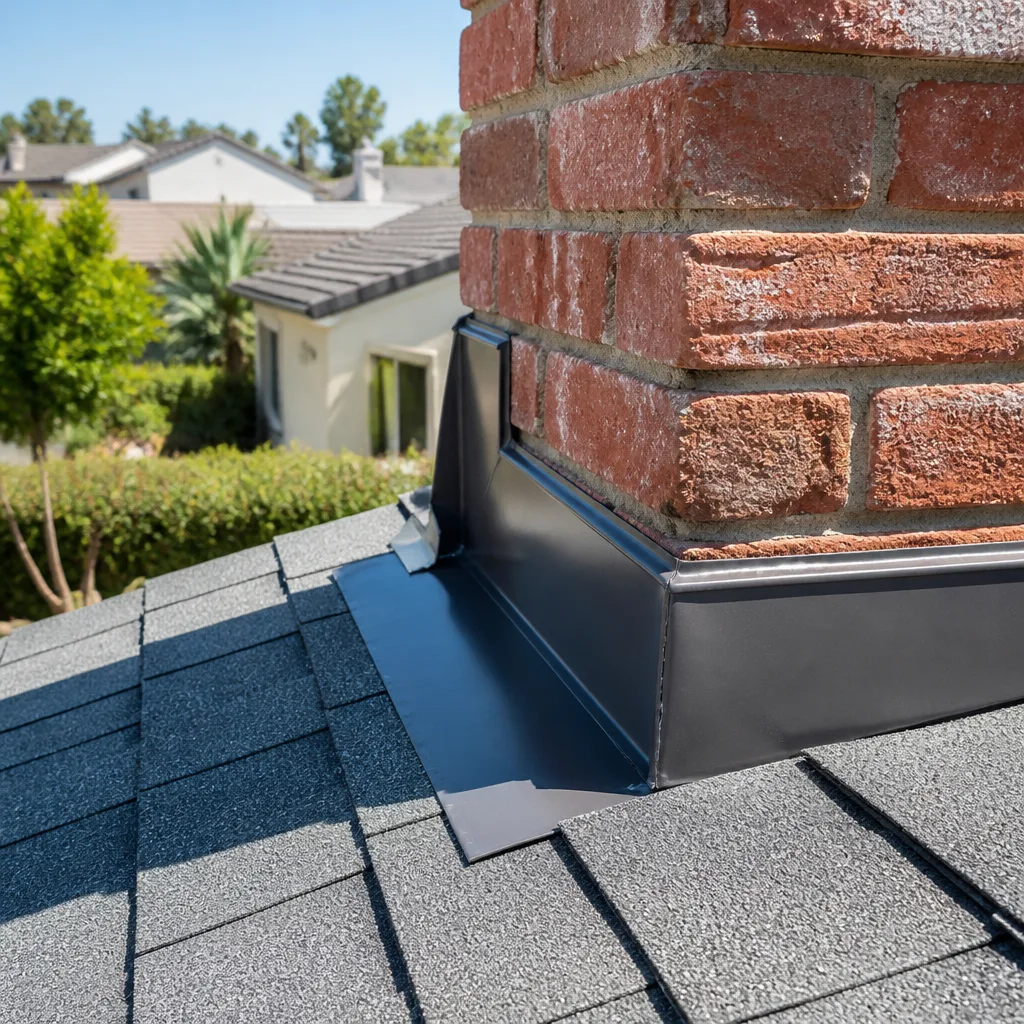
The prep that matters most is flashing and drainage. Flashing is the metal that seals the roof at walls, valleys, chimneys, and vents. It’s what stops water from getting behind the roofing. When flashing is properly seated, heavy rain runs off as intended. When it’s loose, lifted, or sealed with dried-out caulk, a single atmospheric river can push water into the structure in an afternoon.
Before winter in Folsom, check these:
- Roof-to-wall flashing: is the metal tight against the siding, and is the sealant healthy or cracked?
- Valley flashing: is it visible and clean, or covered with debris that will hold water?
- Chimney and skylight flashing: where the roof meets anything vertical, water pools against it.
- Gutter pitch and downspout outlets: gutters that slope the wrong way or drain right against the foundation push water where it shouldn’t go.
- Attic ventilation: a well-vented attic dries out the underside of the roof deck, which matters when winter rain doesn’t dry off quickly.
Winter is not the time to discover a flashing problem. It’s the time to have one fixed, if you can, before the next storm. If you’re not sure how your roof will handle the next wet season, a roof replacement is sometimes the honest answer, and sometimes it’s not. We work with seven top manufacturers so you choose the material that fits your home, not our inventory. roof replacement is a decision worth making with clear information, so we give you options and let you decide. Call (279) 321-0981 to schedule a free estimate.
Spring: Moss and Lichen Assessment Before It Turns Structural
Spring in Folsom is when the aftermath of a wet winter shows up on the roof. Moss and lichen that don’t look like much in January are visible by March. The common mistake is treating them as a cosmetic issue. In our experience, they’re an early warning, not a surface blemish.
Here’s the distinction worth understanding. Moss holds water against the roofing material, and that water sitting in place keeps the shingles or underlayment wet far longer than a passing rain would. Over a season or two, that constant moisture softens the surface and starts working on the layer below. Lichen is different. It grows a small root into the roofing granules, which breaks down the surface slowly and lets water into places it shouldn’t reach. Neither stops on its own.
A spring assessment protocol for Folsom:
- Look at the shaded roof planes first. North-facing and tree-covered slopes stay wet longest and grow moss first.
- Distinguish the growth. Moss is green or brown and fuzzy; lichen is flat, crusty, and often gray-green or pale.
- Check what’s underneath. Lift a small section only if it’s safe to do so. More importantly, check the attic ceiling in the same area for stains or soft spots.
- Don’t power-wash. Pressure washing breaks shingle granules loose and drives water under tile. If the growth is significant, it’s a job for a roofing professional, not a cleaning crew with a pressure washer.
- Check roof-to-roof transitions where moss is common and easy to miss, like the lower edge of a dormer wall.
If the assessment finds moss or lichen on a roof that’s otherwise in good shape, treatment and removal is a smaller job than most people expect. If the assessment finds soft spots or staining inside the attic, you’re looking at something more. Both start with an honest look. We install shingle roofing, tile, and metal systems, so the conversation isn’t about which material we prefer. It’s about what fits your home and your budget. Ask us to compare your options. That’s what pros do.
The Ridge Cap Inspection Nobody Does
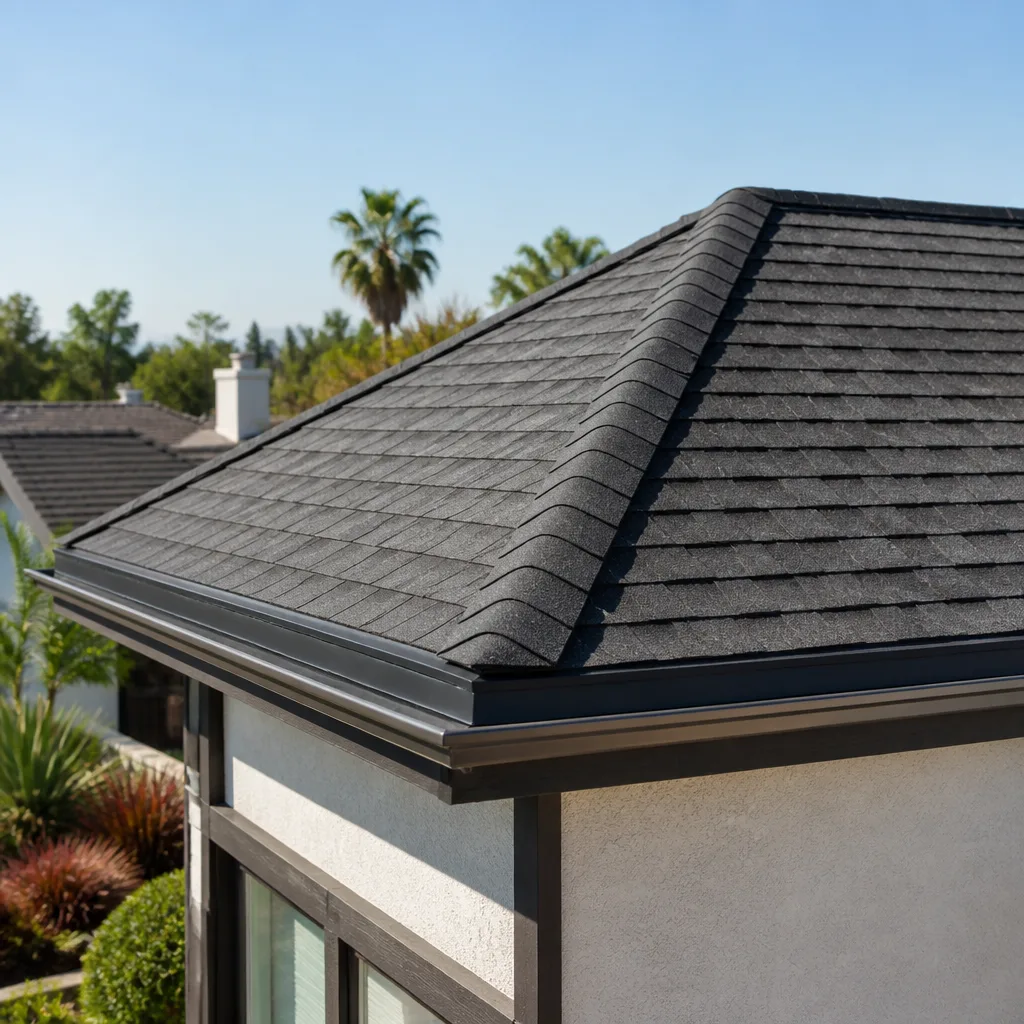
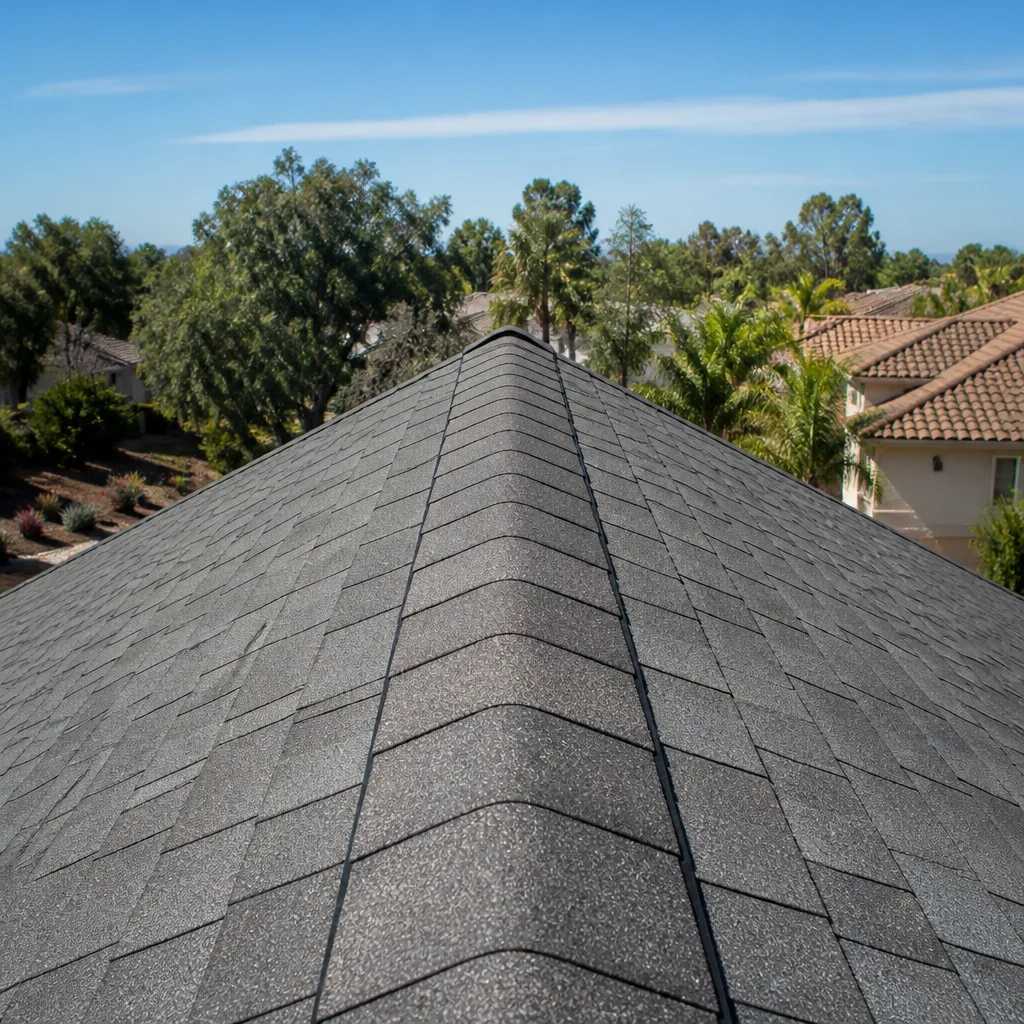
Ridge cap is the material at the very top of the roof, covering the peak where the slopes meet. It’s the single most skipped inspection point on Folsom roofs, and it’s the one most likely to lead to interior water damage when it fails.
Why is it skipped? Because it’s hard to see from the ground and it’s not visible from inside the attic. From the street, roof ridges look fine. From the ladder, you can see them, but you have to look. The failure mode is quiet: the nails that hold the ridge cap back out under thermal cycling, the overlapping pieces lift slightly, and water finds a path in at the peak. Because the peak is the highest point on the roof, the water runs down both slopes under the covering, which means the damage shows up somewhere unexpected, often at the ceiling far from the ridge.
What to check for at the ridge:
- Nails backing out. Look for nail heads visible above the ridge cap surface, which means the fastener has lifted.
- Lifted or separated courses. The overlap between ridge pieces should be flush and sealed.
- Cracked or missing sealant along the ridge line.
- Deteriorated ridge vent material, if the roof has one. Vent material breaks down from UV and heat, and when it does, water can enter at the ridge and warm attic air escapes where it shouldn’t.
- Light visible from inside the attic along the ridge line, which is a clear sign the ridge is no longer sealed.
Ridge cap inspection is worth doing each spring and fall in Folsom, since heat damage accumulates in summer and storm exposure hits in winter. If you’re not comfortable on a ladder, that’s fine. Most people aren’t, and we don’t recommend it. Call (279) 321-0981 for a free estimate. A fifteen-minute conversation can save you a ceiling replacement.
How Your Roofing Material Changes the Seasonal Checklist
The tasks above apply to every roof, but the specifics shift depending on what’s on your house. Shingle, tile, and metal each have their own seasonal sensitivities in Folsom’s climate, and a guide that pretends otherwise isn’t useful.
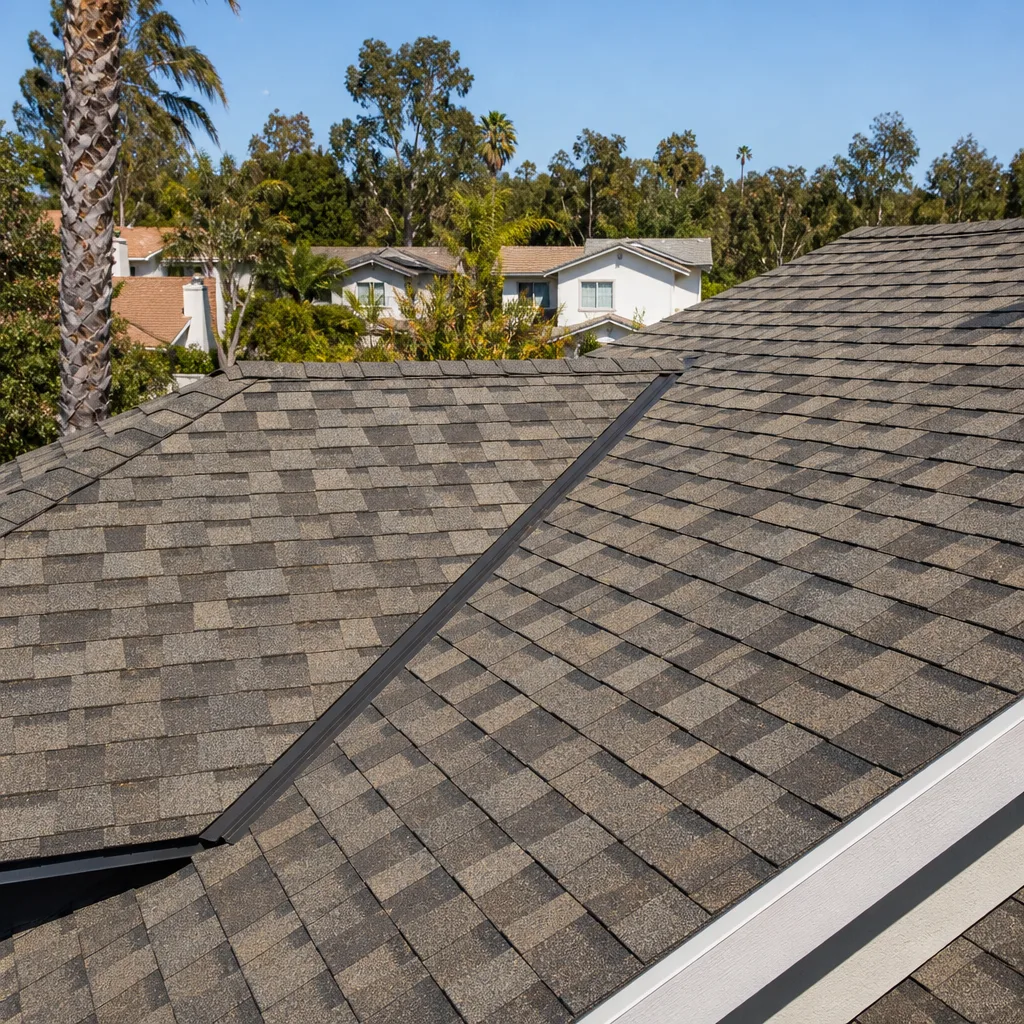
Shingle roofs. Asphalt shingles in Folsom go through more thermal cycling than in cooler climates, and the granules that protect the asphalt wear faster as a result. Seasonal checks focus on granule loss in gutters (visible as sand-like grit at the bottom), lifted tabs at edges and hips, and sealant at penetrations. Shingle is the most common material on Folsom homes, and it’s also the material where a small loose tab in July becomes a lifted course by October. We install products from GAF and Tamko, among others, across premium and value tiers.
Tile roofs. Tile handles heat better than shingle in most respects, but it’s not immune. Individual tiles crack and slip, and the underlayment beneath the tile is what actually keeps water out. In Folsom, the seasonal priority on tile is inspecting for cracked and displaced tiles after summer and checking the underlayment where tiles have shifted. We install Boral tile products, which matters if your roof is tile; many roofers work in shingle only and outsource tile work. Our capability is in-house across all three systems.
Metal roofs. Metal expands and contracts with temperature more visibly than any other material. In Folsom, that means the fasteners and washers are the seasonal inspection point. A backed-out screw with a compressed washer is a small thing in July and a leak in January. Metal also reflects less heat once the finish dulls, so surface condition matters over time. We install metal systems from Atlas, among other suppliers.
If you’re choosing between these materials for a replacement or a new build, the right question isn’t which lasts longest. It’s which fits your home’s structure, your budget, and the way you want to maintain it. That’s a conversation, not a sales pitch. new roof installation decisions deserve clear, honest information across all three materials.
A Simple Seasonal Roof Care Calendar for Folsom
The schedule that works in Folsom doesn’t follow the seasons the way most homeowners expect. Here’s a compact version you can actually use.
- Early summer (June): pre-summer inspection. Check fasteners, sealant, and seams before the heat peak. Photograph anything questionable.
- Mid-summer (July-August): stay off the roof. Use binoculars from the ground to spot lifted courses or backed-out fasteners. Note any interior ceiling changes.
- Late summer (September): post-heat inspection. This is when thermal damage shows. Have anything found addressed before the wet season begins.
- Fall (October-November): clear gutters and downspouts repeatedly as oaks and pines drop. Check valleys for debris buildup. Trim overhanging branches before leaf drop if possible.
- Early winter (November-December): flashing and drainage check. Verify gutters slope correctly and downspouts drain away from the foundation.
- After storm events: walk the perimeter visually and check the attic for new staining. Don’t get on the roof in wet weather.
- Spring (March-April): moss and lichen assessment. Ridge cap inspection. Attic check for signs of winter intrusion.
Two formal inspections a year, one in spring and one in late summer, cover most of what matters. If you’d like a baseline for your Folsom home, whether the roof is new or has been through several seasons, we can schedule a free estimate. Call (279) 321-0981.
Common Mistakes to Avoid
- Treating the roof as an annual check. In Folsom’s climate, a single annual inspection misses the summer damage window. Thermal cycling works on the roof between May and September, and the damage is often worse by fall than it was in spring.
- Power-washing moss off. Pressure washing strips shingle granules and drives water under tile. In Folsom’s dry summers, the torn-up surface left behind dries out and cracks faster, and the moss comes back.
- Dragging blowers across the roof surface. Blowing is fine if the nozzle is kept off the shingles. Dragging it can strip granules and crack tiles, and the repair costs more than the cleanup.
- Ignoring the ridge cap because it looks fine from the street. Ridge failures are the leading hidden cause of interior water damage on Folsom roofs. If you’ve never had the ridge inspected, it’s worth doing.
- Walking the roof in summer heat. Shingles and tile are more brittle when hot, and the risk of causing damage or slipping is higher. Inspect from the ground or from a ladder in warm weather.
- Assuming new gutters fix drainage. Gutters that slope away from the downspout or downspouts that empty next to the foundation push water where you don’t want it. The gutters aren’t the problem; the routing is.
- Buying a full replacement when repair is enough, or repairing a roof that’s past its service life. Both happen. We install Folsom Roofing Pros materials from seven name-brand manufacturers, but the first question we ask is whether you actually need a replacement. Honest answers save homeowners money in both directions.
When to Call a Professional
Some seasonal checks are fine from the ground. Others need a trained eye on the roof. Call a professional if you see water staining on any interior ceiling or wall near the roof line, if attic rafters show dark streaks or daylight, if shingles or tiles are visibly lifted or missing, if the ridge cap shows damage, if moss or lichen covers a significant portion of any roof plane, or if a storm has left debris impacted into valleys and flashing. Any of these can be small or can be the beginning of something larger, and a professional inspection is the only way to know which. Folsom Roofing Pros offers free estimates in Folsom. Call (279) 321-0981. We answer 24/7. Fast dispatch from 7am to 7pm, Sunday through Friday.
Frequently Asked Questions
Twice a year is the minimum in Folsom: once in late summer after the heat peak and once in early spring after the wet season. That’s because the two seasons stress different parts of the roof. Summer stress shows up in fasteners and seams; winter stress shows up in flashing and moss. A single annual inspection will miss half of what’s happening. Call (279) 321-0981 for a free estimate if you don’t know when your roof was last inspected.
Yes. Summer heat causes more incremental damage to Folsom roofs than winter rain, because 100°F+ days followed by cool nights work fasteners loose and open seams across hundreds of cycles. The damage is easy to miss because it happens on a dry roof. Most of the roof problems we see in Folsom trace back to summer thermal stress that went unaddressed. Call (279) 321-0981 to schedule a late-summer inspection.
Call a professional if the moss covers more than a small patch or has been there more than one season. DIY removal damages shingle granules and can crack tile, and the growth tends to return if the underlying moisture issue isn’t addressed. A minor patch on a well-maintained roof can be monitored. Anything more is worth an inspection. Call (279) 321-0981 for a free estimate.
Ridge cap inspection is a check of the material covering the peak of the roof, where the two slopes meet. It matters because ridge failures are the most common hidden source of interior water damage on Folsom roofs, and they’re the hardest to see from the ground. The nails back out, the overlap lifts, and water enters at the highest point and runs down both sides. Call (279) 321-0981 if you’ve never had it checked.
Oak leaves and pine needles are the two main debris sources on Folsom roofs, and both cause the same problem: they hold moisture against the roofing material and clog drainage. Pine needles are worse in some ways because they mat together and stay wet longer. Clearing gutters and valleys is the seasonal fix. If debris is already heavily impacted, an inspection is worth doing before the wet season. Call (279) 321-0981.
Yes. Metal roofs need fastener and washer checks each summer; tile roofs need cracked and displaced tile checks after summer heat; shingle roofs need granule loss and tab checks twice a year. The underlying climate stresses are the same, but the failure points differ. We work across shingle, tile, and metal systems, so an inspection reflects your actual roof rather than a generic checklist. Call (279) 321-0981 for a free estimate.
The Bottom Line
Seasonal roof care in Folsom comes down to understanding that the roof’s hardest season is summer, not winter, and that the damage hides until the rain finds it. Inspect twice a year, in late summer and early spring. Clear oak and pine debris in fall without damaging the surface. Check flashing and drainage before the atmospheric rivers arrive. Assess moss and lichen in spring before the growth turns structural. Don’t skip the ridge cap, because it’s the one inspection that most often determines whether you have a small repair or a ceiling leak.
If you’d like a professional assessment of your roof as it stands now, whether you’re planning a replacement or just want a baseline, call Folsom Roofing Pros at (279) 321-0981 for a free estimate. We install shingle, tile, and metal systems from seven name-brand manufacturers, and we’ll tell you honestly what your roof actually needs. Name-brand materials. Manufacturer-backed warranties. Installed by specialists.
Written by the team at Folsom Roofing Pros.
See the difference
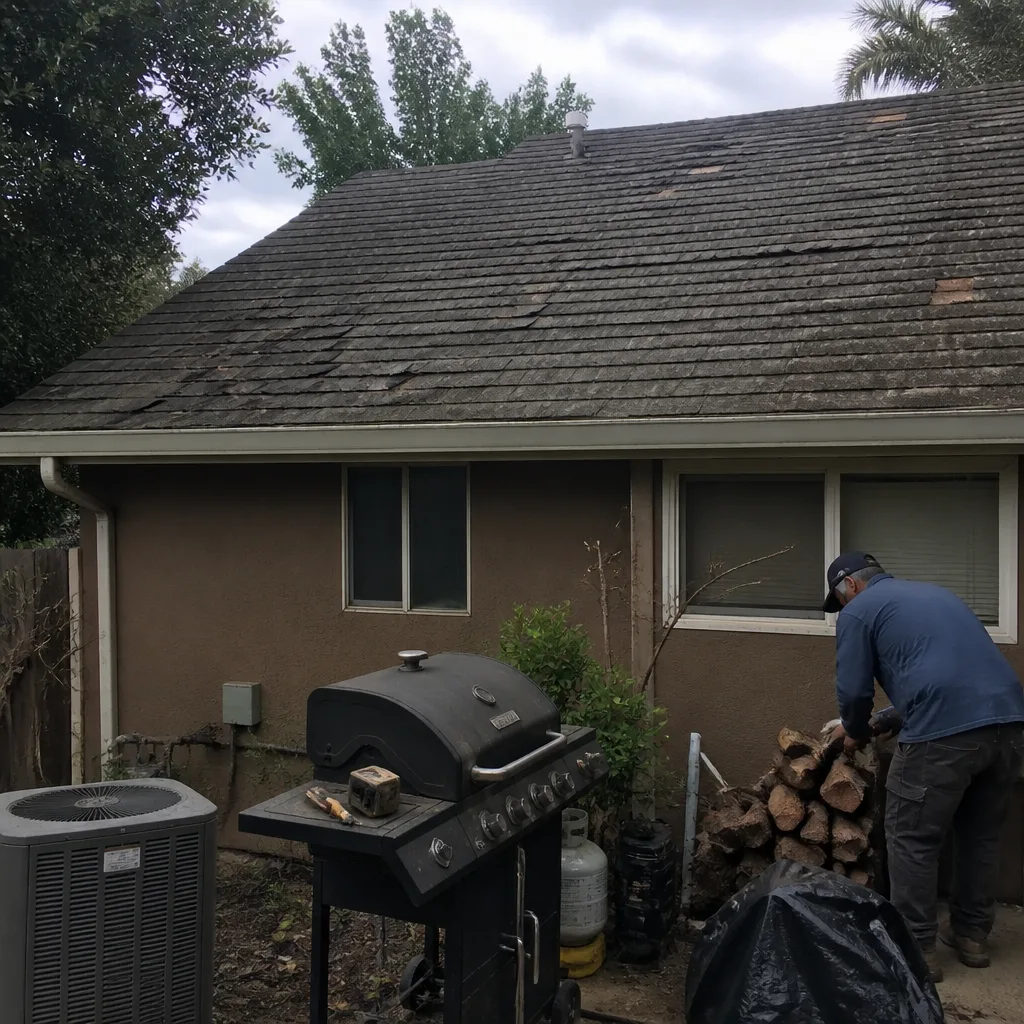 Before
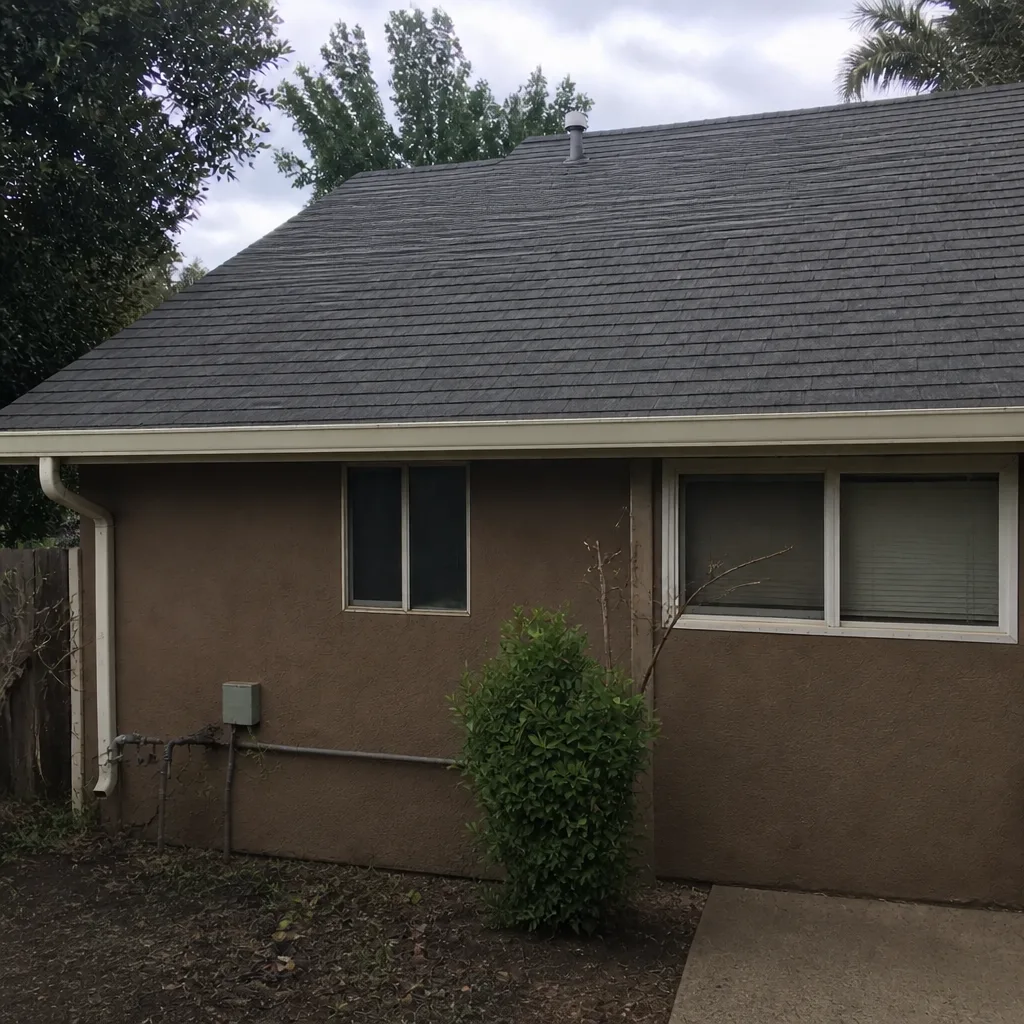 After
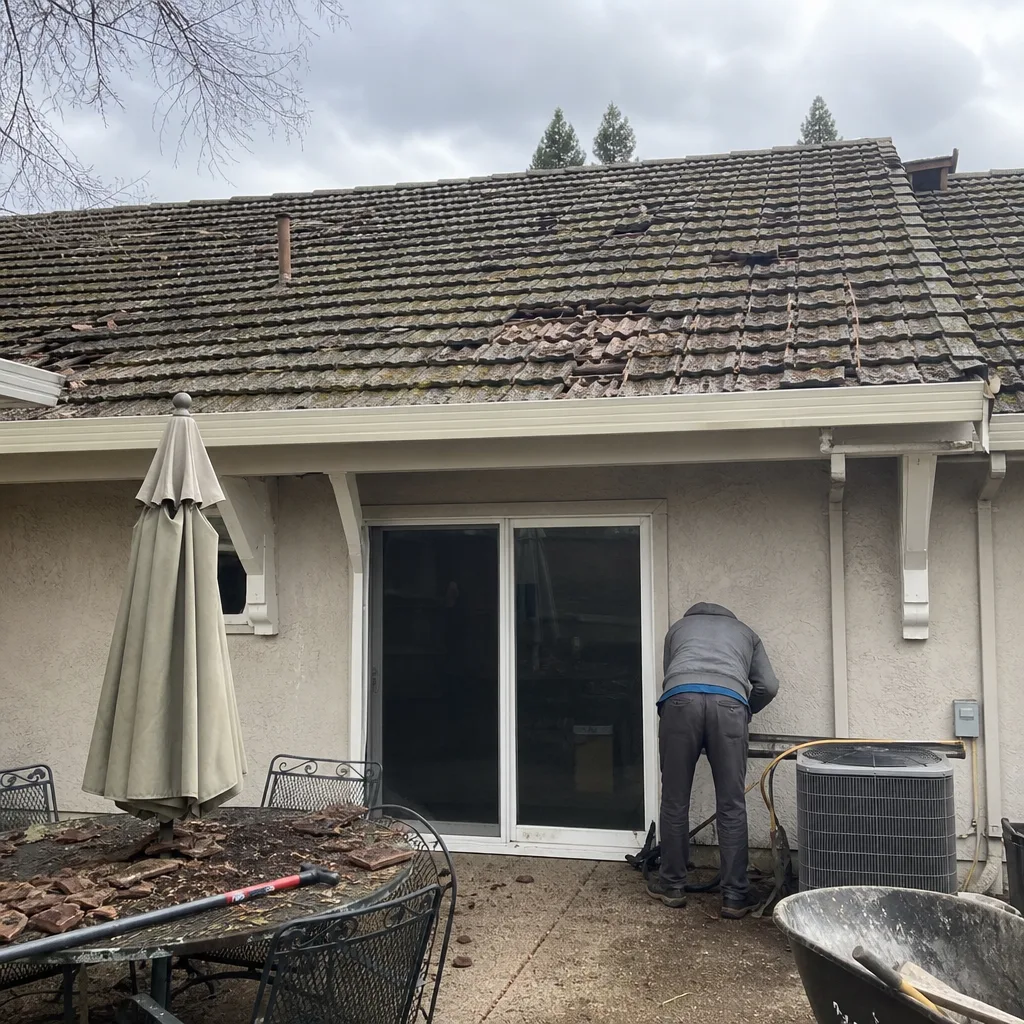 Before
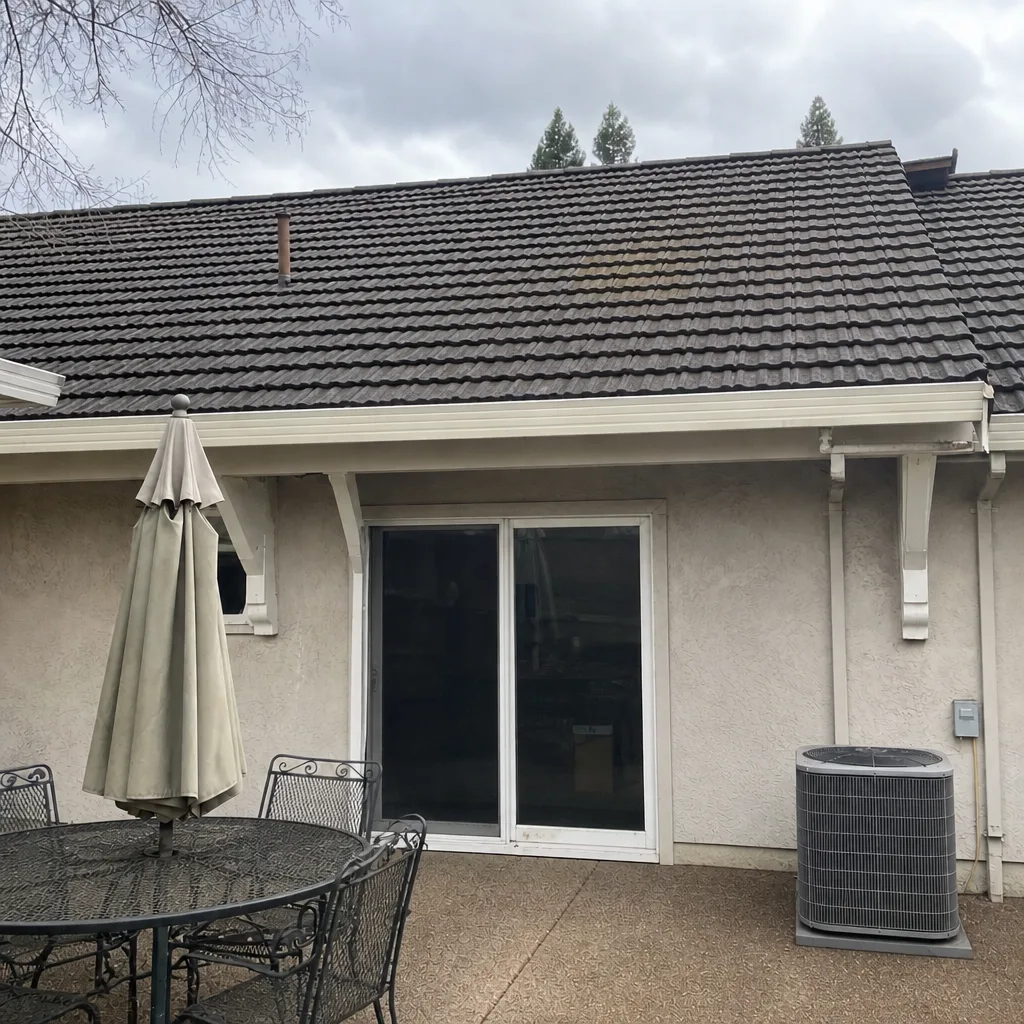 After
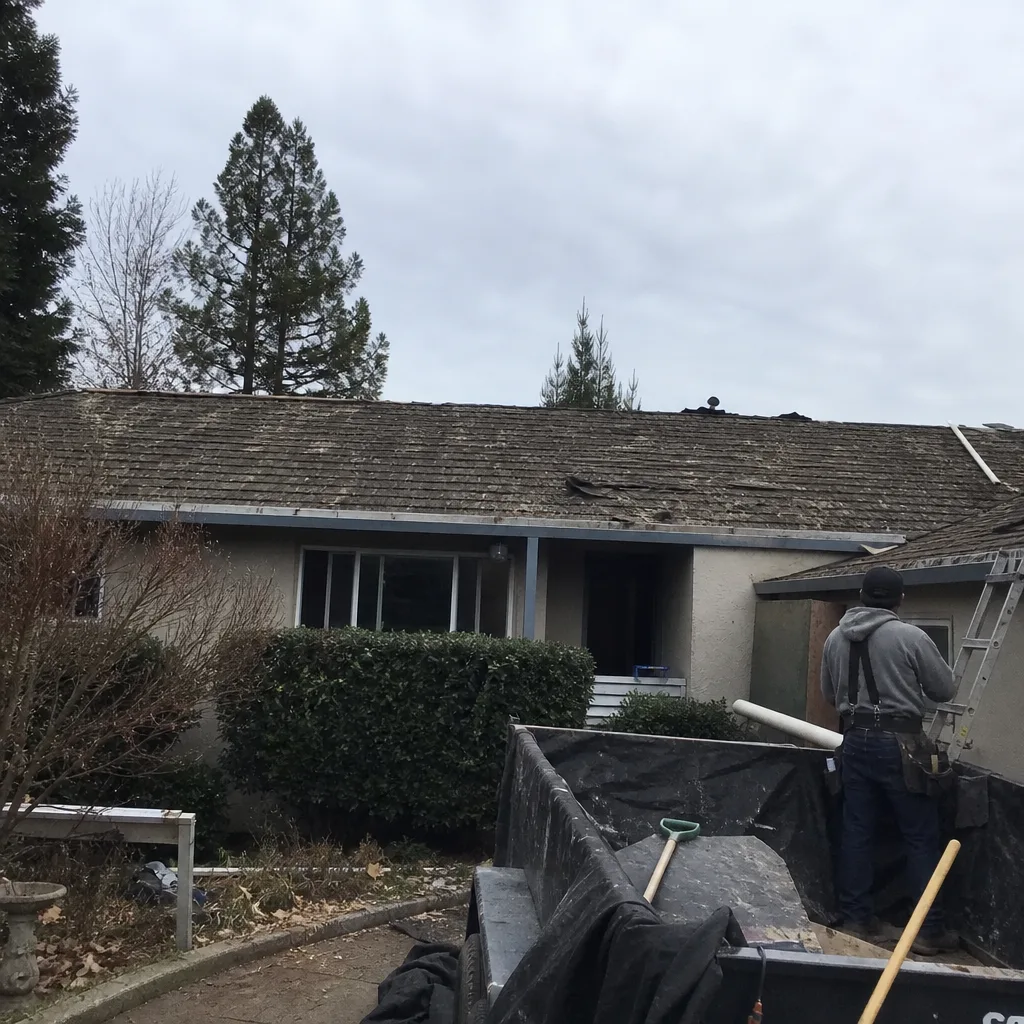 Before
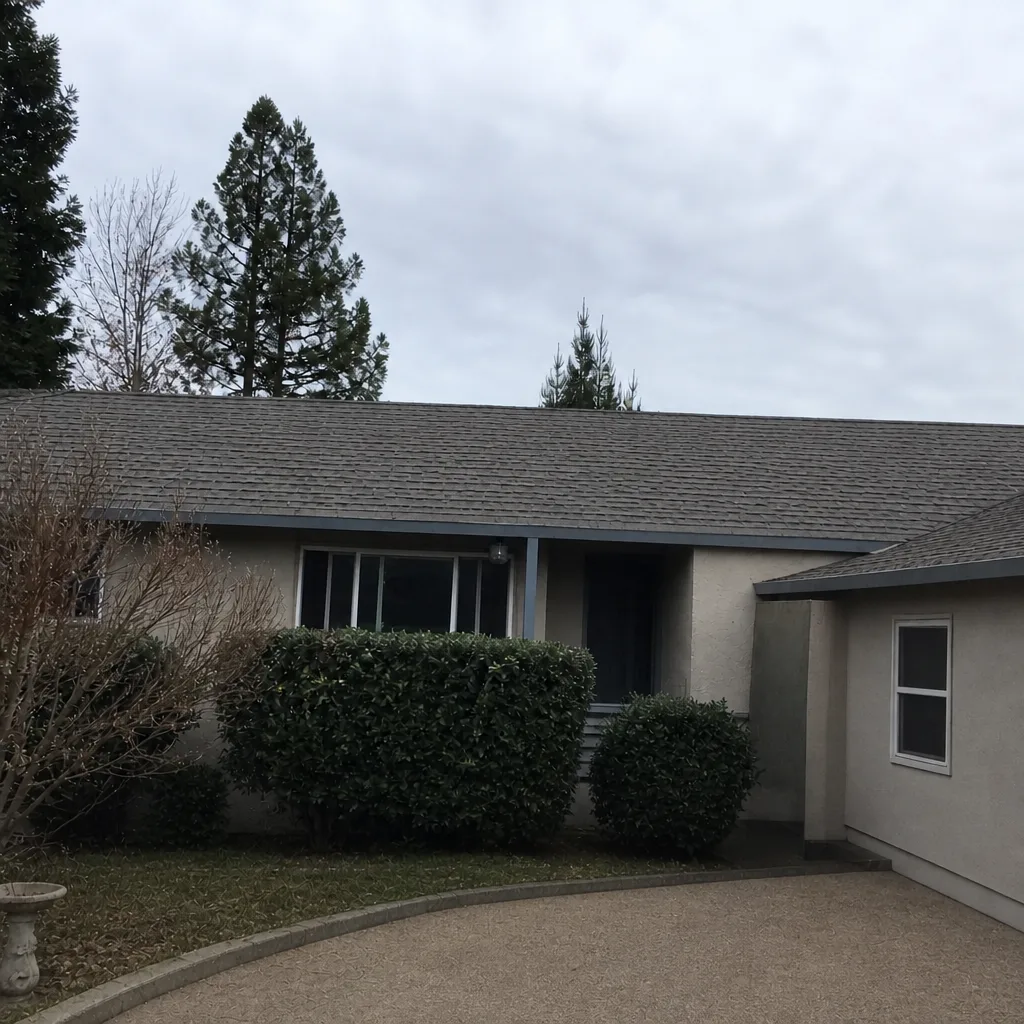 After