Last updated November 25, 2026

Free roof inspection with deck photos before we talk money - GAF and Owens Corning certified installation
Roofing Emergency Preparedness Guide for Folsom Homes
Most Folsom homeowners we talk to have a wildfire plan. They know their evacuation route, they’ve cleared defensible space, they’ve thought through what goes in the car. Then the storm that actually takes their ceiling down arrives from the opposite direction: a wet atmospheric river system that pushes debris across a roof at 2am, or a wind gust that lifts a ridge cap and lets water into the attic while the family sleeps. The emergency that most often catches Folsom homes off guard isn’t fire. It’s water, and it usually starts weeks before anyone knocks on a roofer’s door. In this guide, we’ll walk through how storm damage actually develops on Folsom roofs, how to tarp a damaged roof safely from the ground, what to document in the first two hours, how to vet an emergency contractor on three minutes of research, and what belongs in a pre-storm kit sitting in your garage right now.
Quick Answer
A roofing emergency in Folsom is handled in this order: stop the water (ground-based tarping or interior catch), document everything with photos and a written timeline, call your insurer to open a claim the same day, then vet a roofing contractor using your state license lookup, business address, and written scope before anyone gets on the roof. The single most useful preparation is knowing which licensed roofer you’ll call before the storm, because after a major atmospheric river system moves through the Sacramento region, local crews book out for weeks while unvetted storm-chasers knock on doors the next morning.
Styles & brands we work with
- Architectural shingles
- Metal roofing
- Tile roofing
- GAF
- Owens Corning
- Flat & low-slope
Table of Contents
- How storm damage actually develops on a Folsom roof
- How to tarp a damaged roof safely (without getting on a wet roof)
- What to document in the first two hours
- How to vet an emergency roofing contractor in three minutes
- Building your pre-storm roofing kit
- How shingle, tile, and metal roofs fail differently in Folsom storms
- When a roofing issue is a same-day call
- Common mistakes to avoid
How storm damage actually develops on a Folsom roof
Roof damage in Folsom doesn’t happen all at once. It follows a predictable chain, and the chain depends on which weather system is passing through and which direction the wind is pushing. If you understand the chain, you can catch a problem at link one instead of link four.
Folsom sits on the eastern edge of the Sacramento Valley, at the base of the Sierra foothills. That geography matters. Atmospheric river systems come in from the Pacific and drop heavy rain across the region, but the foothill transition just east of town creates localized wind acceleration. Wind gusts that don’t show up in a Valley forecast can still hit the ridgelines of Folsom neighborhoods like Empire Ranch, Briggs Ranch, and Folsom Ranch, where new-build roofs sit more exposed than mature tree-lined streets closer to Historic Folsom.
Link 1: Wind lifts or loosens the edge
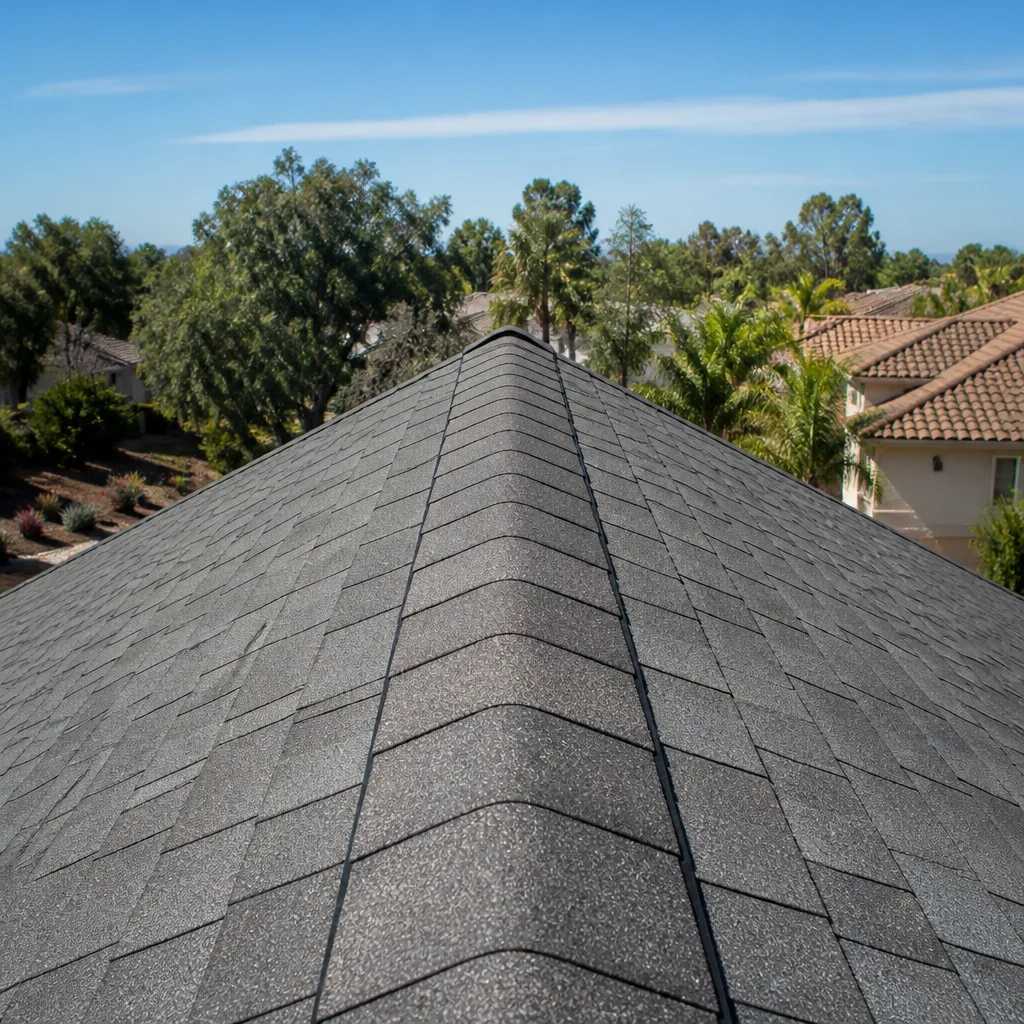
Winds from the south and southwest during winter storm systems tend to stress the windward slope first. On a shingle roof, that means the rake edge, ridge caps, and any field shingle already weakened by age or a previous repair. On a tile roof, wind catches at the eave and can lift individual tiles or break the mortar seal at hips and ridges. Lifted shingles or cracked tiles are visible from the ground with binoculars, and they’re the cheapest fix on this list if you catch them.
Link 2: Debris drives water under the field
Folsom’s mature oak and pine canopy is beautiful until a storm strips branches and drops needles. Debris that lands on a roof and stays there dams water at the most vulnerable points: valleys, penetrations, and behind chimneys. Water that would normally shed off the roof instead pools, works under the field, and starts finding the deck.
Link 3: Fasteners and seals give
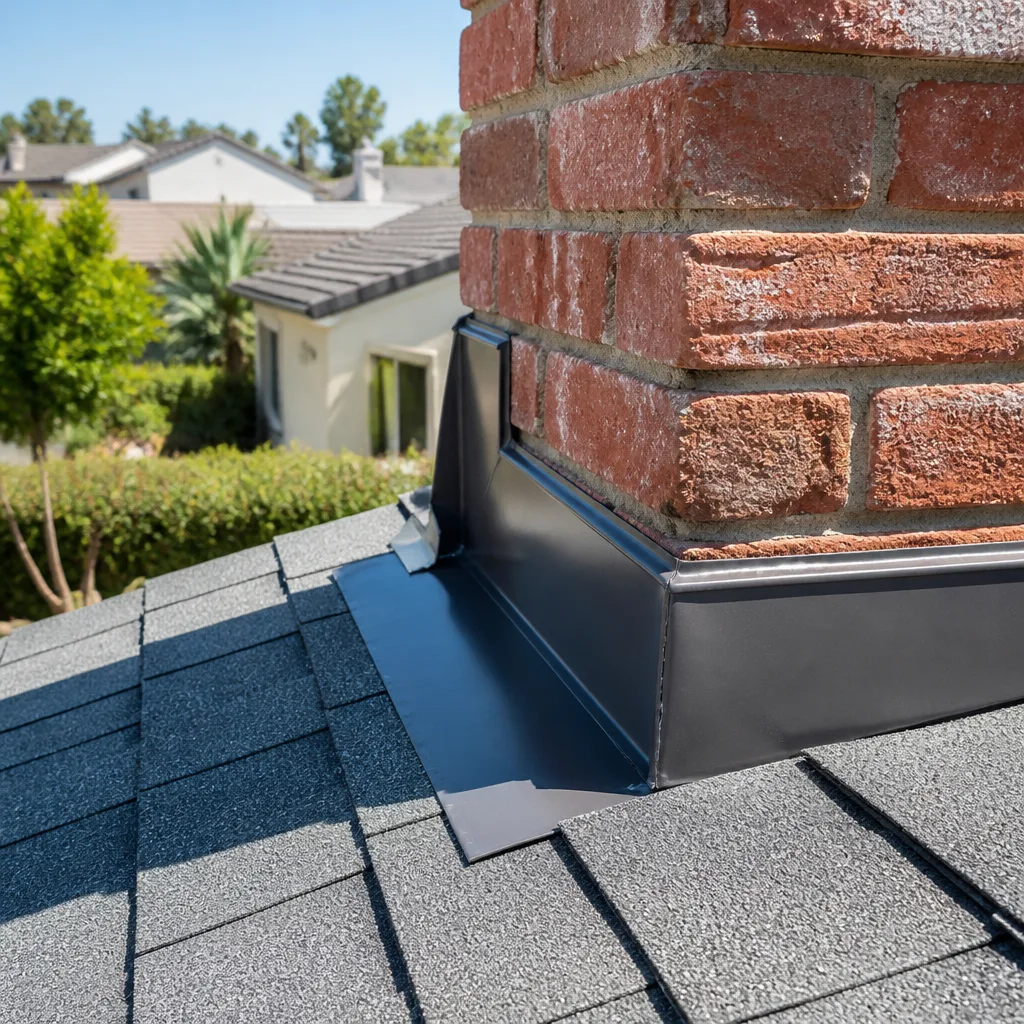
Which is where the cumulative stress shows. Flashing seals at vents, skylights, and chimney surrounds age out. Fasteners back out under vibration. Once the waterproofing layers under the field are breached, every subsequent rain adds to the problem.
Link 4: Interior water intrusion
The final link is the one that costs the most: water reaching drywall, insulation, and framing. By the time you see a brown ring on the ceiling in your Folsom living room, the leak has already been running for days, sometimes weeks. This is exactly why the emergency prep you do in October pays off in February.
How to tarp a damaged roof safely (without getting on a wet roof)
We’re going to tell you something a lot of roofers won’t: in most active-storm scenarios, the safest tarping is done without anyone on the roof. Wet shingles and wet tile are slip hazards, and a fall from eave height is a serious injury. Ground-based tarping is slower and less perfect than a rooftop install, but it stops interior damage while you wait for a professional.
Here is the order we recommend, from your garage to your roof:
- Stop the interior leak first. Get buckets and towels under the drip. If water is pooling in a ceiling, a small pinhole drilled into the drywall relieves the pressure and lets you catch it in a bucket rather than having it collapse. Shut off power to any wet ceiling fixture before you touch it.
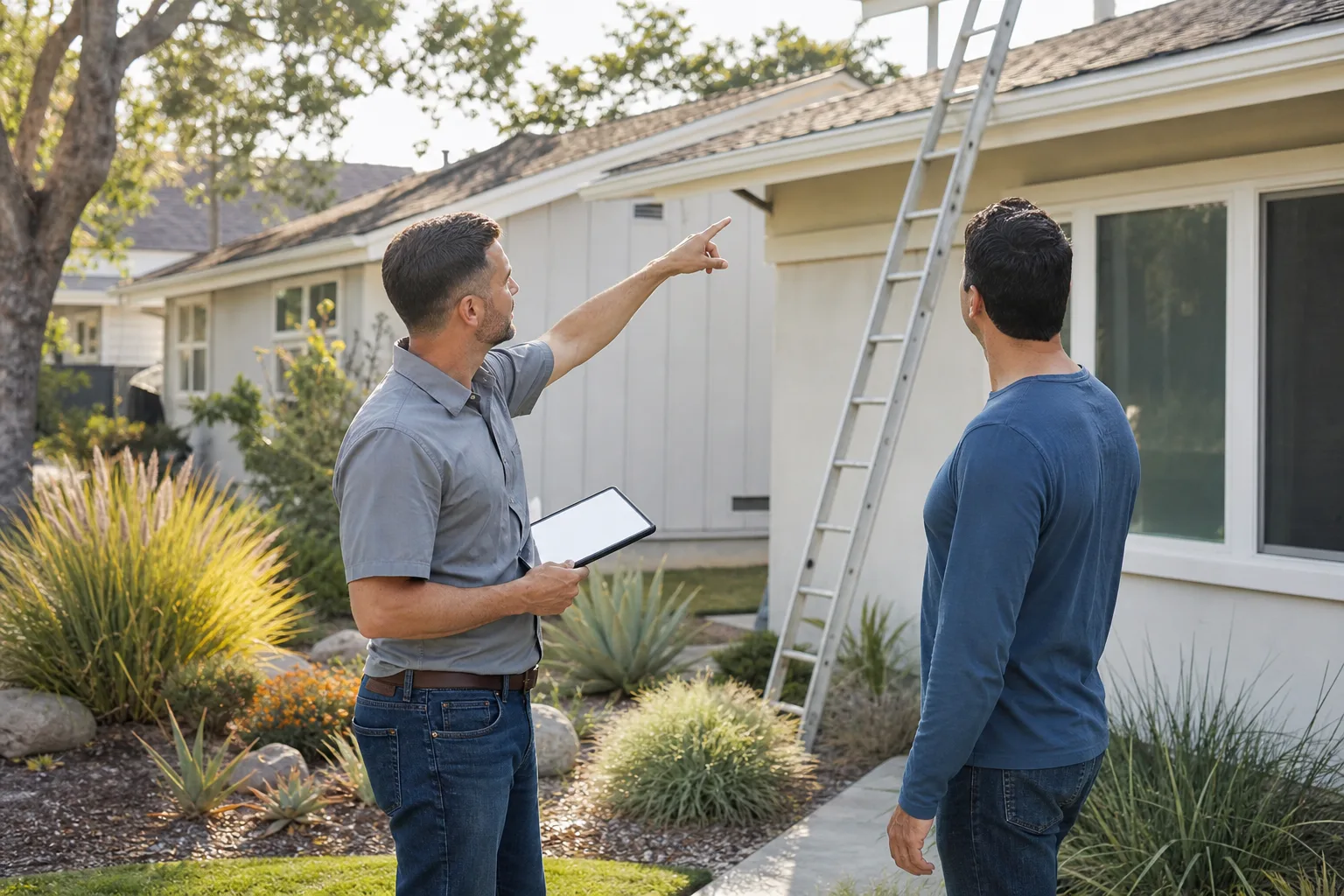
- Assess from the ground. Walk the perimeter with binoculars and a phone camera. Note exact damage locations, not general impressions. Take a photo every ten feet.
- Choose the tarp size. A 20-by-30-foot heavy-duty poly tarp tied off around the ridge and down past the eaves covers most single-slope damage areas. Smaller tarps tend to flap loose in wind and cost you the work.
- Secure the ridge end first, from a ladder. With the ladder resting on firm ground and a spotter at the base, drape the tarp over the top of the ridge, then secure the ridge side. This is the only step that requires any ladder work, and it’s done from the very top of the ladder, feet below the roof edge, never actually on the roof.
- Tie off the eave side to the ground. Use rope or rated bungees anchored to gutters (if structurally sound) or sandbags on the ground. Keep tension even so the tarp doesn’t flap and abrade the surface below.
- Recheck after 24 hours and after the storm passes. Wind and rain will shift tarp tension. Tighten as needed. Remove the tarp once a professional has assessed the roof, because traps water underneath too.
Do not go on the roof during rain, wind, or within a day of either. If the damage is high up or the pitch is steep, wait for a professional. Our technicians have up to 10 years of experience and are trained for that specific hazard. Call (279) 321-0981. We answer 24/7. Fast dispatch from 7am to 7pm, Sunday through Friday.
What to document in the first two hours
Insurance claims move faster when the first 120 minutes are documented correctly. Most homeowners take 40 random photos of the ceiling and forget the roof entirely. Do it in this order instead.
Minute 0-15: Stop the water and take damage-in-progress photos. Before a single bucket moves, photograph the active drip, the water stain, and the wet drywall or trim. Mid-leak photos are the most compelling evidence of active damage and they can’t be reproduced later.
Minute 15-45: Walk the exterior perimeter and photograph the roof. Use your phone’s zoom from the ground. Capture every damaged shingle, cracked tile, lifted flashing, and displaced piece of debris, and take a wide shot of each elevation so the damage has context. Note the direction of the slope (north, south, east, west) for each damage photo. Insurers want to see where the failure is relative to wind direction.
Minute 45-60: Photograph every interior location that got wet. Ceilings, walls, floors, furniture, electronics. Anything water touched is documented. Don’t clean up before you shoot it.
Minute 60-90: Write a timeline. Note the exact time you first noticed the leak, the time you started mitigating, and the weather conditions. A one-page timeline is worth more than an extra 100 photos in the claim process.
Minute 90-120: Call your insurer to open the claim and call a licensed roofer for a written assessment. Don’t wait for the insurer to assign an adjuster before you get your own documentation, because adjuster schedules can lag by days after a major Folsom storm. A written paid assessment from a licensed roofer is a legitimate part of your claim file.
How to vet an emergency roofing contractor in three minutes
This is the section that matters most when storms hit. After any significant weather event in the Sacramento region, out-of-area crews show up with trucks, flyers, and persuasive pitches. Most are legitimate. Some are not. Here’s the three-minute background check that separates them.
- Look up the state license. (60 seconds) California contractors are searchable through the Contractors State License Board. Enter the license number the contractor hands you and confirm three things: the license is active, the licensee name matches the person or company on the contract, and the license classification covers roofing work. A license that’s been suspended or is issued to a name that doesn’t match is a hard stop.
- Verify a physical business address. (30 seconds) Ask for a street address for the business, not a P.O. box, and verify it on a map. A local address paired with a local phone area code is a strong signal. A crew with a floating address is often an out-of-area unit that will vanish when the next storm hits.
- Ask for proof of insurance. (30 seconds) A legitimate contractor will hand you a certificate of insurance with the business named as the insured, plus workers’ compensation coverage. If the answer is “our guys are covered,” that’s not insurance.
- Get a written scope of work. (60 seconds) Every legitimate contractor gives you a written, itemized scope before any emergency work begins. Emergency work can start on a verbal authorization for safety-critical mitigation, but the written scope should follow within 24 hours. If you’re being pushed to sign a large-dollar contract on the spot, walk away.
One more filter we recommend to every Folsom homeowner: ask for the manufacturer’s name and product line the contractor intends to install. Roofers who work with a defined set of manufacturers can show you the product data sheets for the exact material going on your roof. We work with seven manufacturers including Owens Corning, IKO, Atlas, and Tamko, and we’ll present the options before we recommend one. Ask us to compare your options. That’s what pros do.
Building your pre-storm roofing kit
The rest of this guide prepares you for the storm. This section prepares your garage. Assemble these items in a single labeled bin before November, and check the bin each autumn.
The supplies
- Two 20-by-30-foot heavy-duty poly tarps. Not thin painter’s drop cloths. You want 10-mil or heavier, with grommets every 18 inches.
- 100 feet of 3/8-inch rope and a dozen sandbags for ground-based tie-offs when gutters can’t be trusted.
- A 6-pack of rated bungee cords in mixed lengths.
- A 24-foot extension ladder rated for your weight, plus a spotter’s phone number pasted to the rung in case you lend it out.
- A box of contractor-grade 6-mil plastic sheeting and a roll of blue painter’s tape for covering interior furniture.
- Two five-gallon buckets and half a dozen old towels dedicated to leak response, not your good bath towels.
- A battery-powered headlamp and spare batteries. Storm leaks love to reveal themselves after dark.
- A phone-charging brick that’s actually charged before storm season.
The contacts
- Two licensed roofing contractors, with license numbers and written-in-advance contact info. One is a backup. Folsom Roofing Pros is a natural first call: (279) 321-0981, and we answer 24/7.
- Your homeowner’s insurance agent’s direct line and your policy number, written on an index card taped inside the kit lid. Don’t rely on finding it on your phone when the power is out.
- Your utility company’s outage line for reporting downed lines.
The documentation
- A copy of your homeowner’s policy declarations page in the kit, plus a digital copy in cloud storage. Understand your deductible before you have to.
- A printed roof history: installation date, material type, any prior repairs, and any warranty paperwork. If your home is a recent Folsom Ranch or Whitney Ranch new build, this is often still in the original closing packet.
- Annual pre-storm roof photos taken from the ground each October. These baseline photos are your best evidence of “before” condition when the insurer asks whether the damage existed before the storm.
Between the kit and the contacts, you’re ahead of the homeowner who is calling around for the first time while water is running down the inside of their kitchen wall. For a full breakdown of material decisions when replacement time comes, see our guide to roof replacement.
How shingle, tile, and metal roofs fail differently in Folsom storms
Different roof systems fail in different ways under the same storm. Knowing which failure mode is likely on your roof tells you what to inspect after every major weather system, and what to carry in your kit.
Shingle roofs
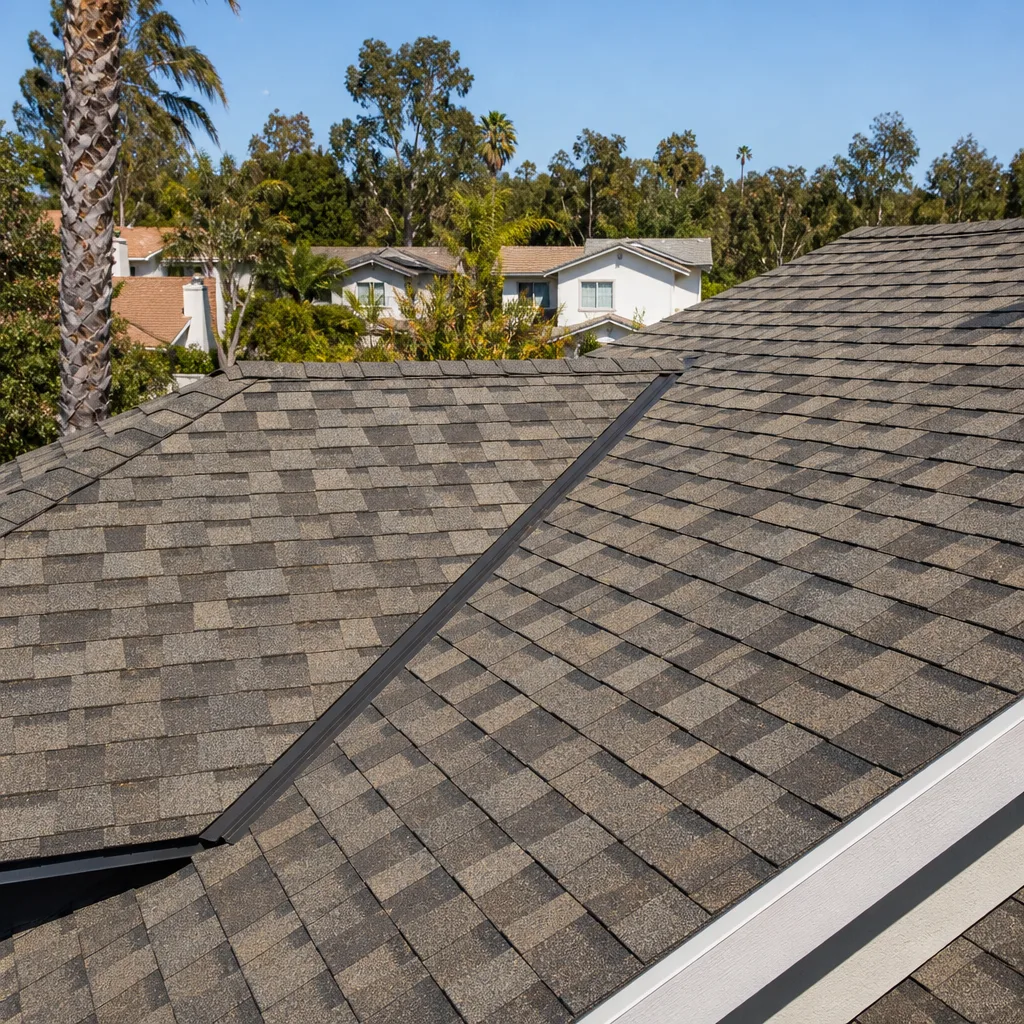
Asphalt shingles are the most common roof material on Folsom homes, and their storm weakness is wind. Sustained gusts lift the sealed tabs along the edges and ridges, and once a shingle loses its seal, the ones next to it are more likely to go. On a 15- to 20-year-old roof, that cascading seal failure is what turns one lifted shingle into an emergency call. After any wind event above 30 mph, take five minutes with binoculars and look at the rake edge and ridge caps. Those are the first places to fail. If it’s time to replace, our page on shingle roofing covers the material options.
Tile roofs
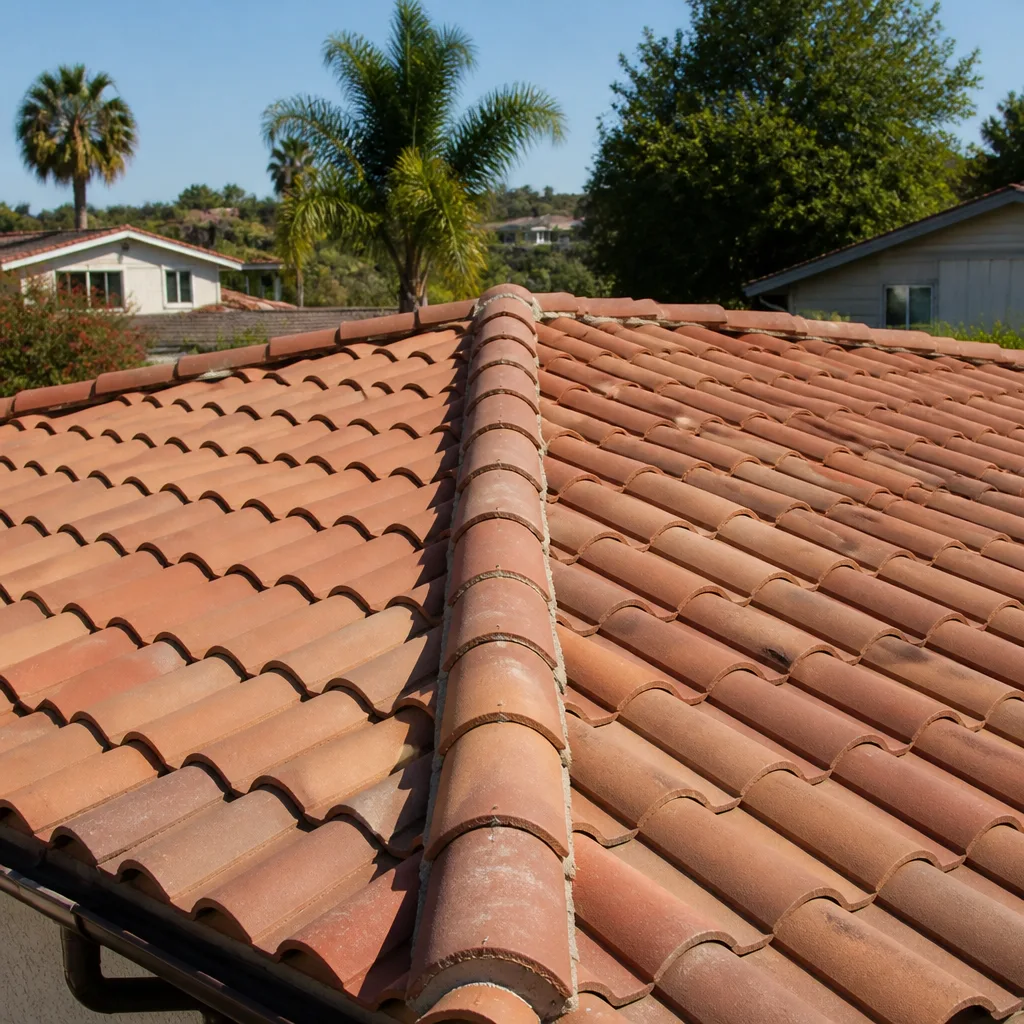
Concrete and clay tile are dense and durable but rigid. Under high wind, individual tiles at the eave or hips can lift, and broken tiles expose the underlayment beneath them. Tile roof leaks after a storm are almost always the result of one broken tile somewhere upslope funneling water into the underlayment. Boral tile is one of the systems we install, and the material’s longevity is real, but it isn’t maintenance-free: tile roofs benefit from a professional inspection after any significant storm system, because the broken tile is often invisible from the ground. That’s why we specialize partly in tile systems: many shingle-first roofers don’t have the training to inspect and repair tile properly.
Metal roofs
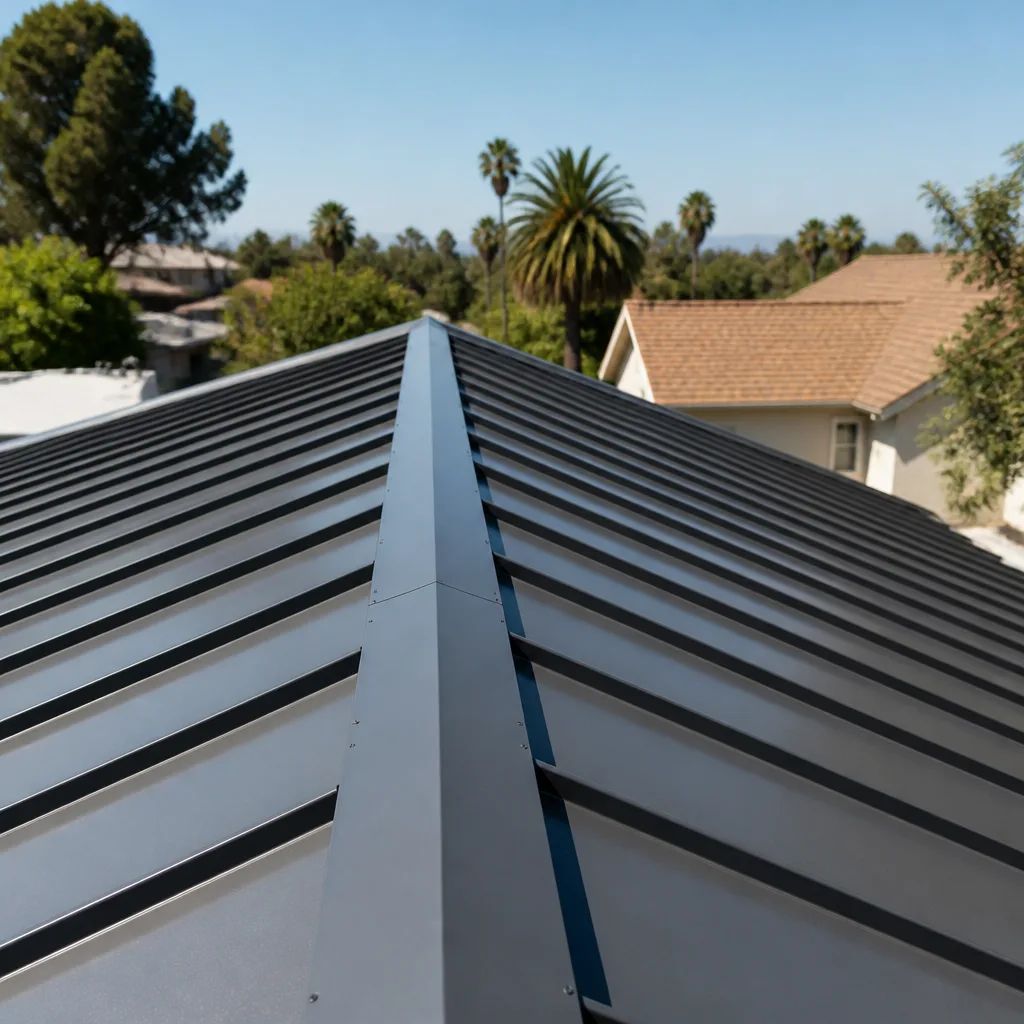
Standing seam metal is the most storm-resistant system on this list, but it isn’t invulnerable. The vulnerabilities are at panel seams, exposed fasteners (on exposed-fastener panels), and around penetrations. Wind-driven rain can force water horizontally into a poorly sealed penetration, and debris impact can dent panels without puncturing them. Metal roofs generally require less emergency intervention after a storm, but the ones that do leak often need a specialist to trace them. For homeowners considering metal as a replacement, we lay out the full spectrum of systems on our Folsom Roofing Pros homepage, including new roof installation for ground-up builds.
What this means for your storm response
- Shingle home: binoculars on rake and ridge after every wind event; expect seal failure to spread quickly if not addressed.
- Tile home: post-storm professional inspection, because broken tile is often invisible from the ground.
- Metal home: check seam-runs and penetrations after wind-driven rain; dents aren’t the concern, missing fasteners are.
When a roofing issue is a same-day call
Not every roof problem is an emergency, and the ones that aren’t should wait for a written estimate rather than a panicked call. The judgement call is worth spelling out so you don’t waste money or wait too long. Here’s our line:
- Call same day: active water intrusion into living space, a visible breach in the roof field, wind damage that has left an area of underlayment or deck exposed, or any water near a ceiling fixture where you can’t immediately shut off the breaker.
- Call the next dispatch window: a small stain that’s new since the last storm, a section of gutter pulling away, or a broken tile you spotted from the ground with no interior water yet.
- You can wait for a scheduled estimate: a leak you’ve already mitigated, general aging concerns, or a full roof that’s approaching the end of its life without active damage. That’s where a proper written scope and material comparison pays off.
For the middle category and above, Folsom Roofing Pros offers free estimates in Folsom, and call (279) 321-0981 to get on the schedule before the storm season fills it. The estimate is free, the price is set per job by the written estimate, and you’ll see the whole scope before any work begins.
Common Mistakes to Avoid
- Getting on a wet roof. Both shingles and tile become slip surfaces once they’re wet, and the number of serious injuries from homeowner tarping is higher than most people realize. Tarp from the ground or wait for a professional.
- Cleaning up before you photograph. Water damage photos taken after the towels come out carry less weight with an adjuster. Shoot first, clean second.
- Calling a roofing contractor in the middle of the storm for the first time. The crews who can help you in 48 hours are the ones you identified before the storm. During a major Folsom weather event, the phone lines of every roofer in the region light up at once, and established customers get scheduled first.
- Skipping the license lookup. It takes 60 seconds on the Contractors State License Board site, and it’s the single best filter against a crew that will vanish before the warranty is worth anything.
- Ignoring a leak that’s “just a stain.” A new ceiling stain in Folsom almost always means water has been running for days or weeks. The interior damage compounds down through insulation and framing long before the ceiling visibly sags.
- Reusing a manufacturer’s warranty from a prior installation. Roof warranties are generally tied to the original installation and can be voided by improper repairs. Ask a professional before counting on a prior warranty on your Folsom home.
- Throwing away the debris. After a storm, damaged shingle chunks, tiles, and flashing pieces are evidence. Bag them, photograph the pile, then discard. An insurer or adjuster may want to see exactly what came off the roof.
See the difference
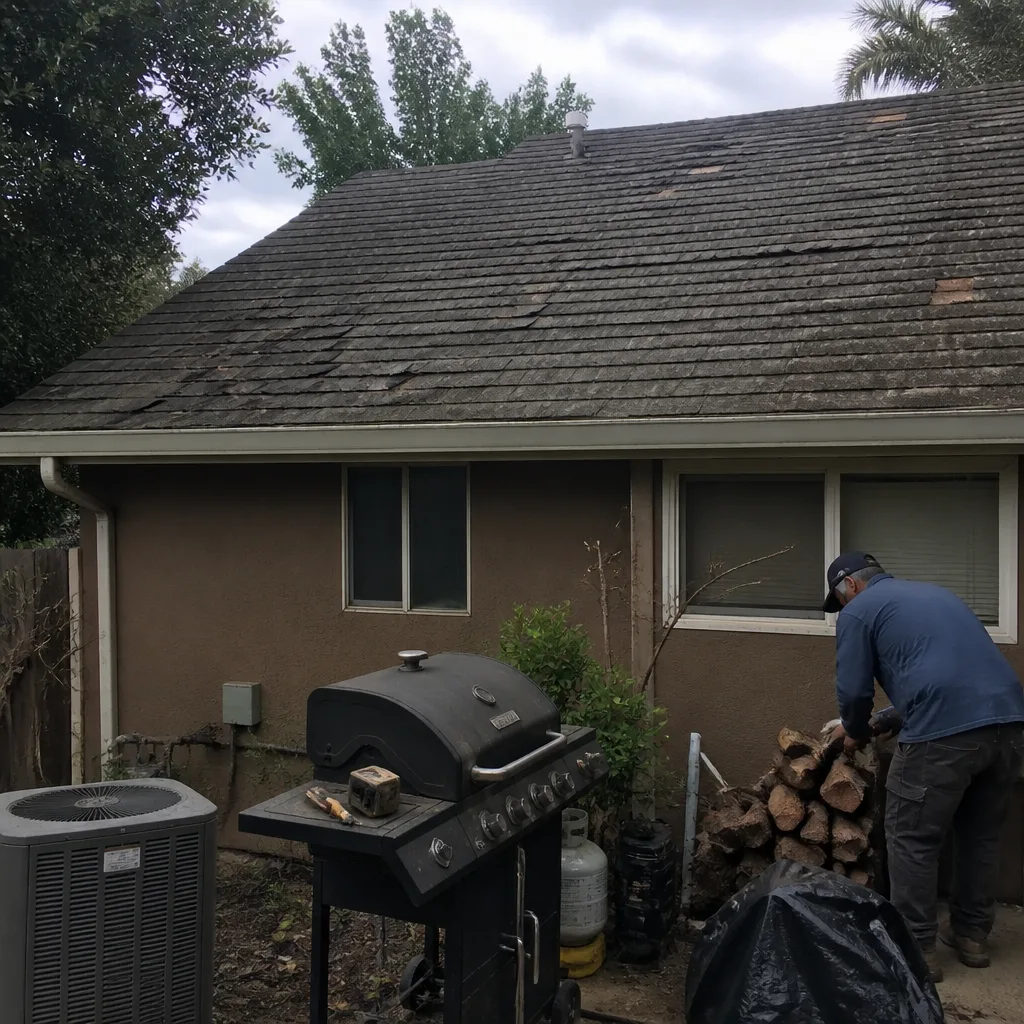 Before
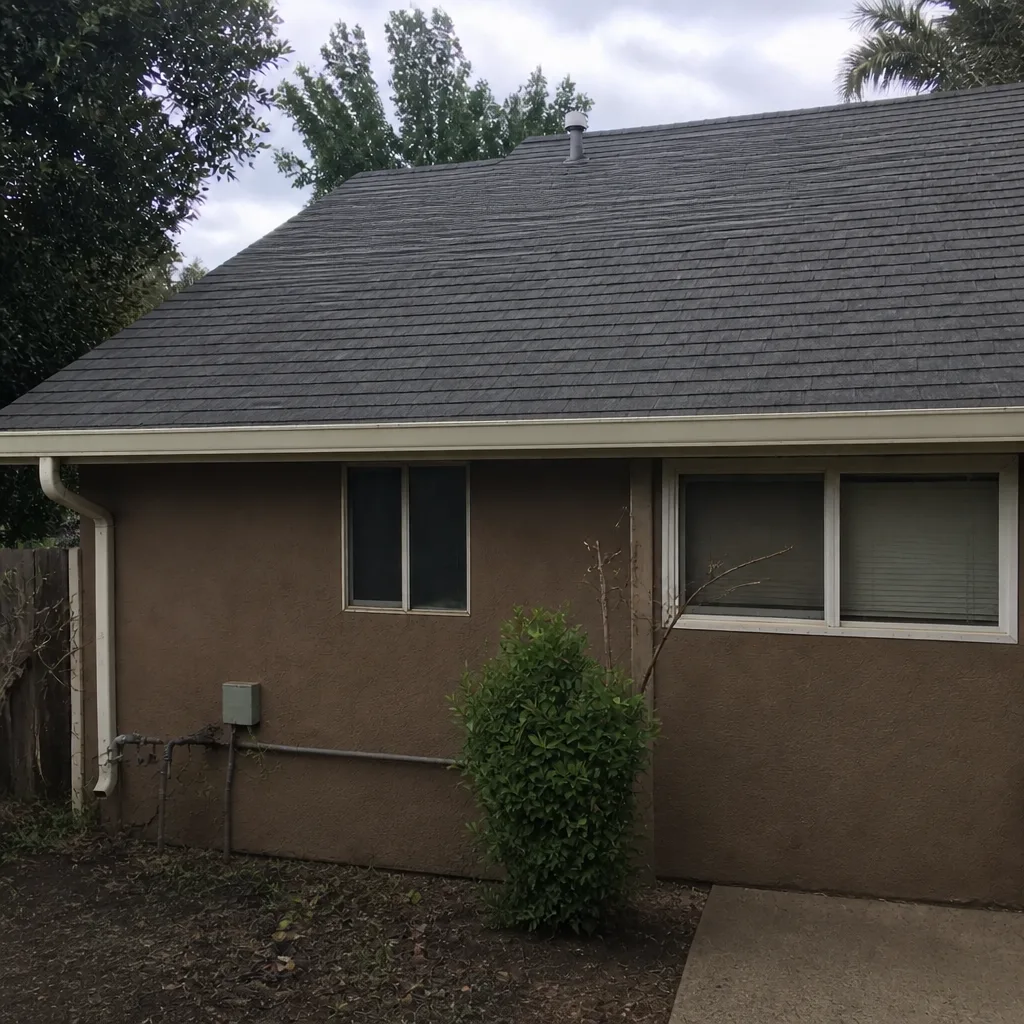 After
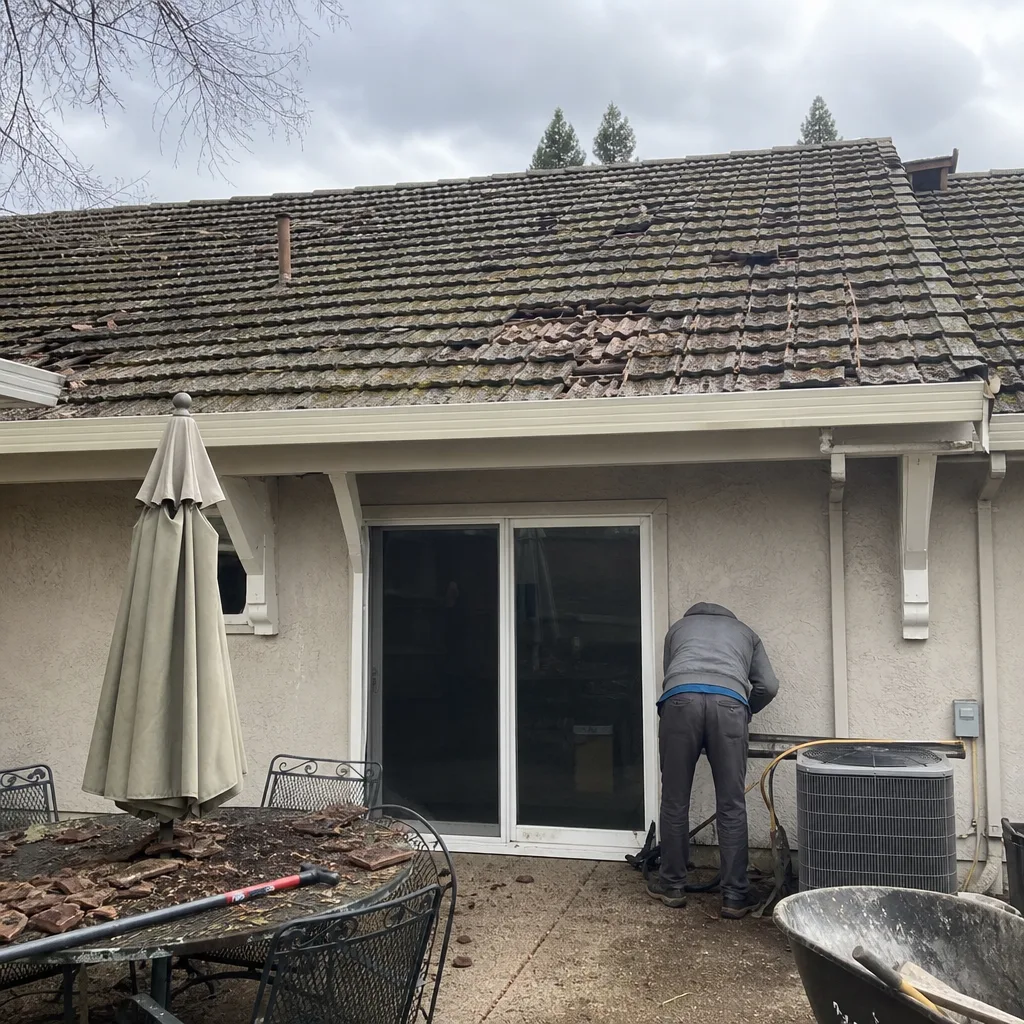 Before
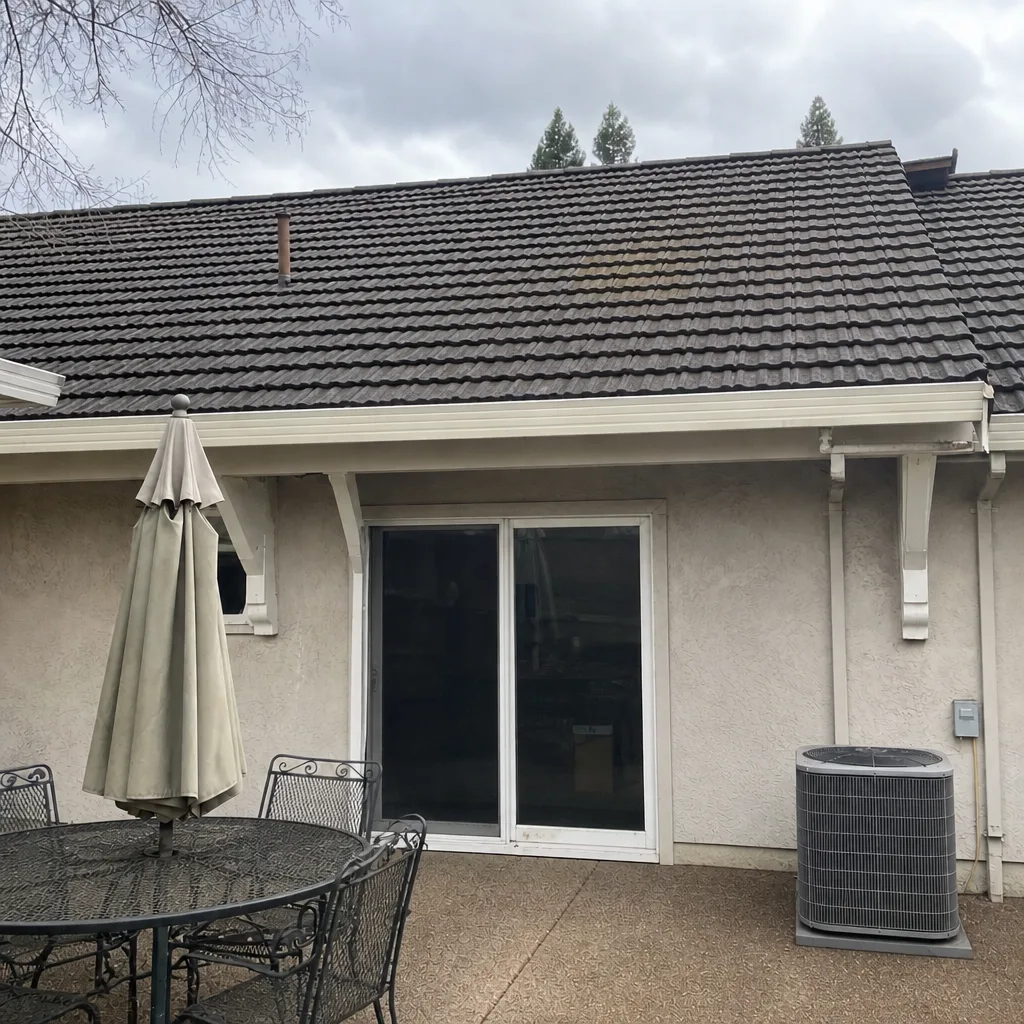 After
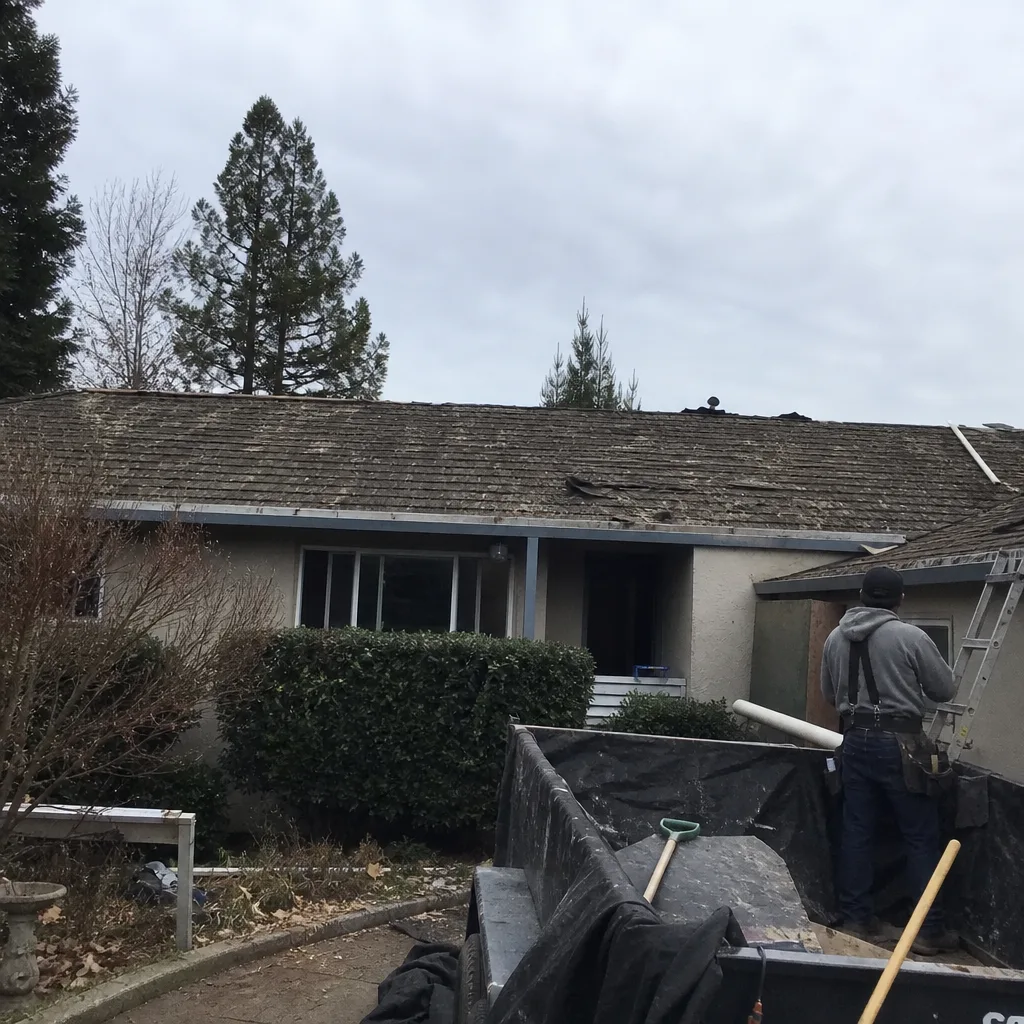 Before
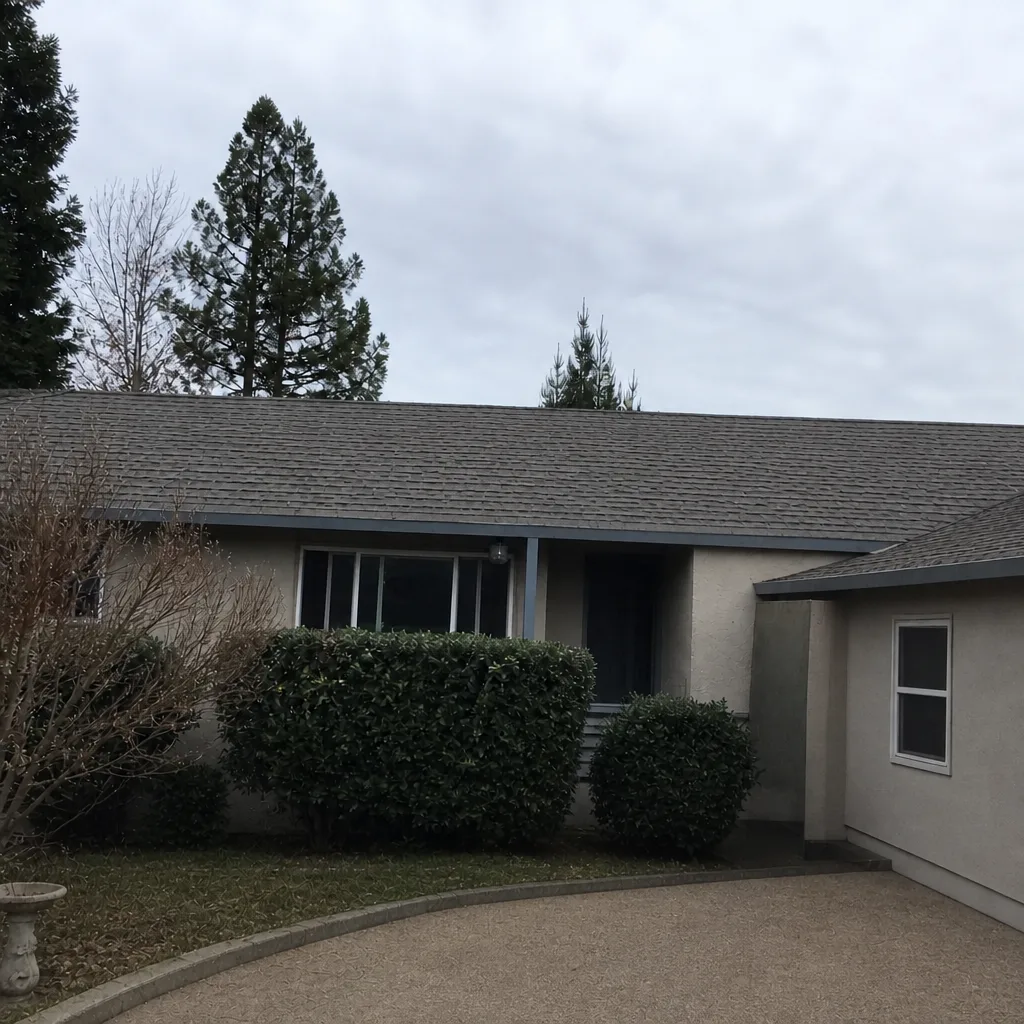 After
When to Call a Professional
Call Folsom Roofing Pros when any of the following is true: water is actively entering your home, you can’t safely stop it from the ground, or the storm damage is above eave height and can only be properly inspected from the roof itself. Also call if a storm-chaser is pressuring you to sign within an hour, because a second written estimate is your best defense against an inflated scope. If you simply don’t know what you’re looking at, that’s a good reason to call too: a licensed roofer can usually tell you in a 20-minute inspection whether you have an emergency or a maintenance item, and there’s no charge to find out. Folsom Roofing Pros offers free estimates in Folsom. Call (279) 321-0981. We answer 24/7. Fast dispatch from 7am to 7pm, Sunday through Friday.
Frequently Asked Questions
Stop the water before anything else. Get buckets and towels under the drip, shut off power to any wet ceiling fixture, and relieve a bulging ceiling with a small pinhole drilled into the drywall so the water drains into a bucket instead of collapsing. Do not get on the roof during active rain or wind. Once the interior is contained, photograph everything and call (279) 321-0981. We answer 24/7.
Most cities, Folsom included, require a permit for structural roofing work and full roof replacement, while some minor repairs fall under lighter rules. The safe answer is to ask your city’s building department about your specific scope, and to ask any contractor you hire whether they’ll pull the permit. A licensed roofer pulls the permit and arranges the inspection as part of the job. Call (279) 321-0981 for a free estimate and a written scope that spells this out.
It depends on the size of the storm and whether you’re calling a contractor you’ve already identified. After a significant atmospheric river system moves through the Sacramento region, demand for local roofing crews spikes within hours, and homeowners calling for the first time can wait several weeks for a non-emergency appointment. The workaround is pre-storm preparation: put a licensed roofer’s number in your kit before winter, not after. Call (279) 321-0981 to open the relationship now, and estimates are free.
Most homeowner’s policies cover sudden storm damage, but not damage from long-term neglect or an aged roof that was already failing. That’s why the pre-existing condition photos you take each October matter: they establish what was normal before the storm. Document the damage, open the claim the same day, and get a licensed roofer’s written assessment in parallel with the insurer’s adjuster. Call (279) 321-0981 for a free written estimate to support your claim.
An emergency repair stops active damage: a tarp, a shingle seal, a broken tile replacement, or a temporary flashing fix. A full roof replacement replaces the roofing system when the damage is widespread or the roof is near the end of its service life. Most storm damage on a healthy roof is repair work. If the storm has revealed that the whole system is aging out, that conversation belongs in a scheduled estimate, not a middle-of-the-night call, and a written scope with material comparisons from a specialist is where it starts. Call (279) 321-0981 for a free estimate either way.
If the damage is a single slope within reach of a ladder and the weather has passed, a ground-based tarp is a reasonable first response. If the damage is high, on a steep slope, involves multiple roof elevations, or the weather is still active, wait for a professional. The most common reason homeowners get hurt in a roofing emergency is trying to do a rooftop tarp on a wet, pitched surface. Our technicians have up to 10 years of experience and are trained for it. Call (279) 321-0981. We answer 24/7.
The Bottom Line
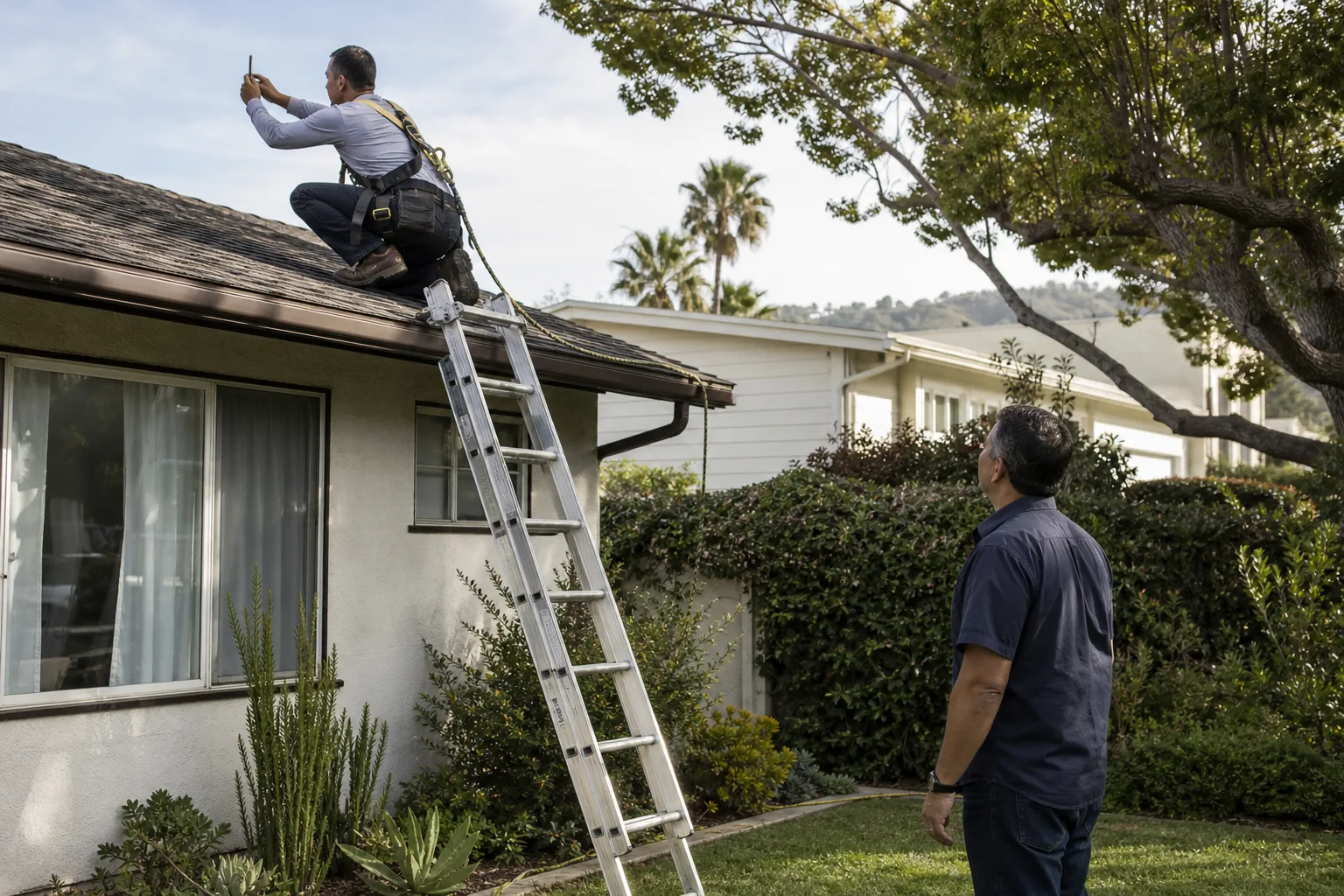
The most common roofing emergencies in Folsom aren’t wildfire damage. They’re storm damage: wind-driven shingle and tile failures during atmospheric river events, and the interior water intrusion that follows. The homeowners who come out of a storm season well are the ones who prepared in October: a stocked tarp kit, a documented roof baseline, a licensed roofer’s phone number already saved, and an insurance contact card taped to a lid. That prep costs a few hundred dollars of supplies and a Saturday afternoon, and it protects everything underneath the roof. When you’re ready to schedule a free estimate or open the relationship before the next storm system arrives, call Folsom Roofing Pros at (279) 321-0981. We answer 24/7. Fast dispatch from 7am to 7pm, Sunday through Friday. Name-brand materials. Manufacturer-backed warranties. Installed by specialists.
Written by the team at Folsom Roofing Pros.