Last updated November 25, 2026

Free roof inspection with deck photos before we talk money - GAF and Owens Corning certified installation
Roofing Warning Signs: A Folsom Homeowner’s Reference Guide
Most roofing warning-sign articles describe damage that’s already catastrophic: a sagging deck, a waterfall in the hallway, shingles scattered across the lawn after a storm. By the time you see those things, the conversation has moved from maintenance to full replacement. The signs that actually matter in Folsom show up much earlier, and they’re visible from the ground. We’re talking about the grit in your gutters after the first fall rain, the way a ridge line looks from the street at 4pm, a faint brown ring on an attic rafter you’d miss if you didn’t know where to look. This guide teaches you to read those signals, material by material, so you can tell the difference between a roof that’s aging gracefully and one that’s telling you to act.
Quick Answer
The most reliable early warning signs of roof trouble in Folsom are granule loss in gutters and at downspout outlets, curled or lifted shingle edges, cracked or displaced concrete tiles, dented or loosening standing-seam panels, rust streaks and popped fasteners, daylight or water staining in the attic, and granules or dark rings around roof penetrations. Cosmetic fading and minor surface weathering are normal on a 15-to-25-year-old roof. Structural signals like sagging, active water intrusion, widespread fastener failure, or daylight through the deck mean you should call a roofer now rather than wait.
Styles & brands we work with
- Architectural shingles
- Metal roofing
- Tile roofing
- GAF
- Owens Corning
- Flat & low-slope
Table of Contents
- The 10-Minute Ground-Level Inspection: What to Look For From the Yard
- What Failure Looks Like on Shingle vs. Tile vs. Metal Roofs
- Reading Your Attic in Summer: Heat Intrusion vs. Active Water Infiltration
- Cosmetic Aging or Structural Compromise? A Folsom Decision Framework
- Installation Defects That Show Up 2 to 5 Years After a Replacement
- Penetrations, Flashing, and Valleys: The First Places to Fail
- A Seasonal Watch Calendar for Folsom’s Climate
- When Warning Signs Mean Repair and When They Mean Replacement
The 10-Minute Ground-Level Inspection: What to Look For From the Yard
You don’t need to climb a ladder to catch most early roof problems. In Folsom, the single most productive inspection is a slow walk around the perimeter of your home at ground level, done twice a year and always after the first significant fall or winter rainstorm. Binoculars help. A ladder doesn’t, and a homeowner on a roof is a safety risk we’d rather you skip entirely. Let the inspection stay on the ground.
Here’s the sequence we recommend, in order:
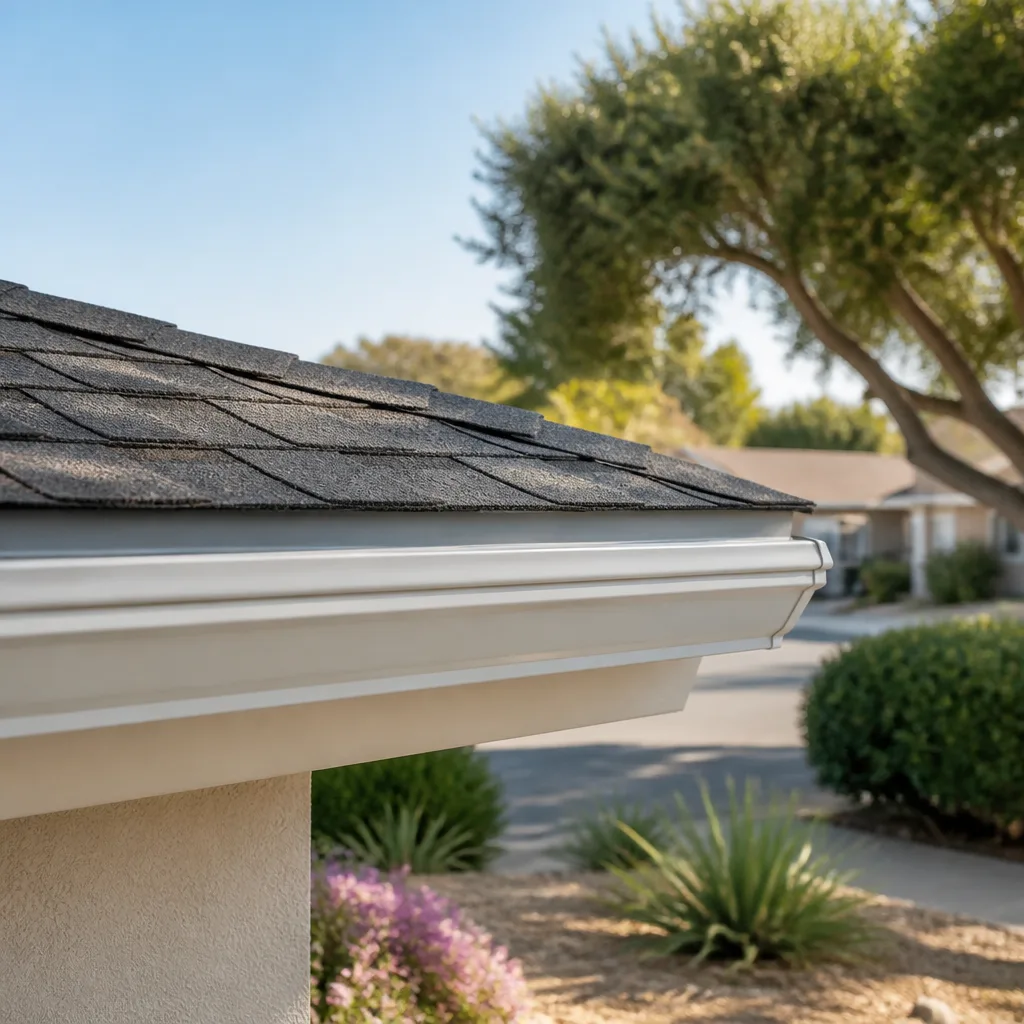
- Walk the gutter line first. Look for grit, dark granular material, or shingle fragments where the downspout meets the ground or inside the gutter itself. This is your earliest material signal, covered in detail below.
- Scan the roof plane from the street. Look for shingles that appear lifted, curled, or visibly darker or lighter than their neighbors. On a tile roof, look for tiles that are cracked, slid down, or missing entirely, leaving a gap in the field.
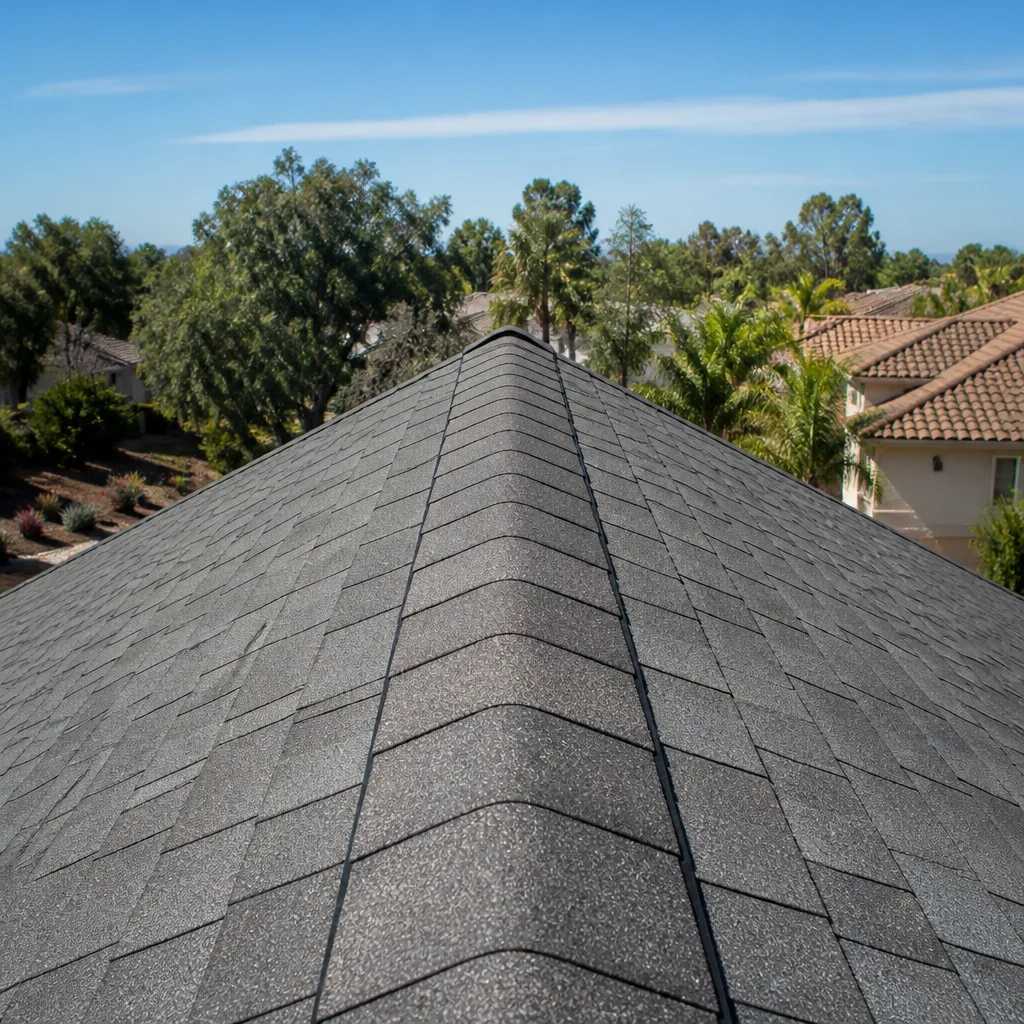
- Check the ridge and hip lines. These are the highest-stress points on most Folsom roofs. Look for a wavy or “humped” ridge, missing ridge cap shingles, or a line of tiles that no longer sits flat.
- Inspect the valleys. Valleys are where two roof planes meet, and they channel every drop of water off the roof. Look for rust streaks, staining, or visible separation in valley flashing.
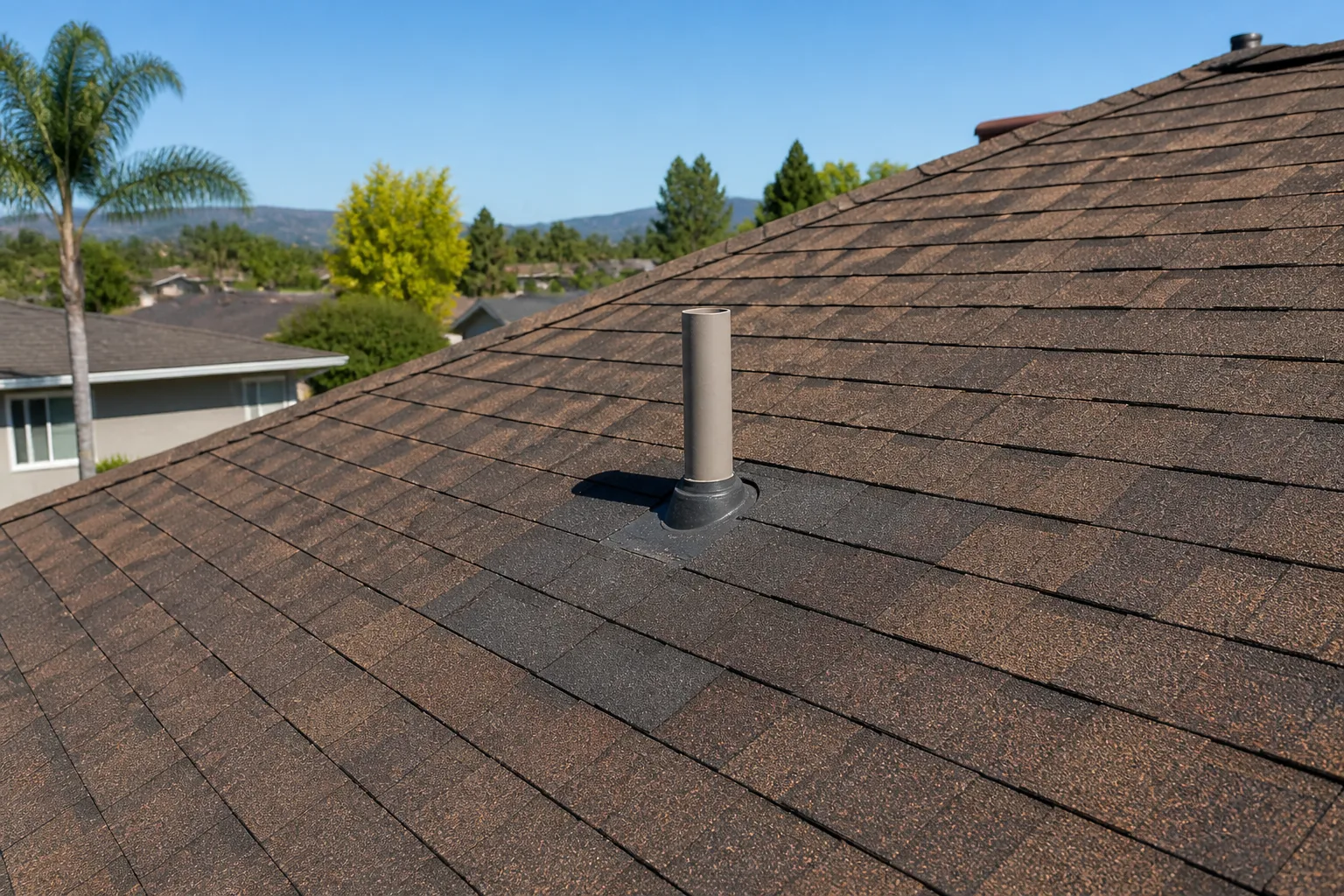
- Look at every penetration. Vents, chimney flashing, skylight curbs, satellite mounts, and any pipe boots. In our experience, penetration flashings are the most common source of early leaks in Folsom.
- Check the fascia and soffit. Look for peeling paint, discoloration, or bubbling in the wood trim just under the roof edge. That’s often the first visible sign of water tracking back under the shingle course.
- Look up from the front and back, not just one side. Shading hides problems. A roof plane that looks fine from one angle can show obvious lifting when viewed from another.
If a roof soffit or attic edge shows damage, that’s a signal to call a specialist, not to climb up to “take a look.” Height work causes more serious injuries every year than the roof problem itself will. A trained professional can get on the roof safely, walk it correctly, and photograph what they see.
What Failure Looks Like on Shingle vs. Tile vs. Metal Roofs
A warning sign on one roofing material can be meaningless on another. The failure modes are genuinely different, and a Folsom homeowner with a 20-year-old asphalt shingle roof is watching for different things than a neighbor with a 20-year-old concrete tile roof. This is where generic guidance falls short, and where we spend most of our time with homeowners. Folsom Roofing Pros installs all three major material systems, so we’ve had a lot of conversations about exactly this distinction.
Asphalt Shingles (GAF, CertainTeed, Tamko, and more)
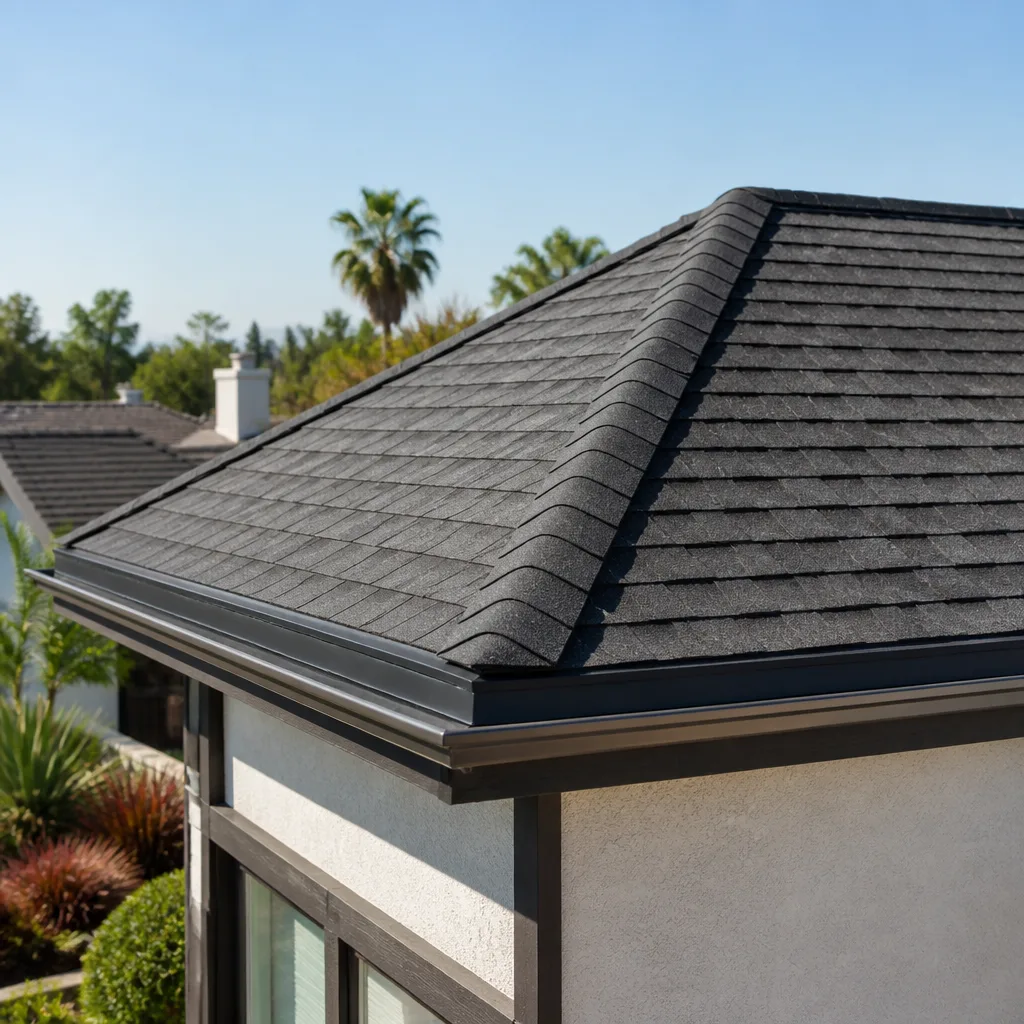
Asphalt shingles age from the top down. Sun exposure drives the oxidation that makes shingles brittle, and granule loss is the loudest signal. Every asphalt shingle carries a mineral granule surface that protects the asphalt underneath. As a shingle ages, it sheds those granules, and the granules collect in the gutters and at the foot of downspouts. A handful of grit after a storm is normal. A steady stream every time it rains, with visible bare patches on the shingle surface, means the shingle is past its protective layer and into rapid decline.
- Curled, lifted, or “cupped” edges along the bottom of the shingle course
- Dark streaks or staining (often algae, sometimes moisture retention)
- Granule accumulation in gutters and at downspout outlets
- Cracked or torn shingles, especially near the ridge
- Exposed nail heads or popped fasteners
Concrete Tile (Boral and others)
Concrete tile doesn’t fail the way shingles do. The tiles themselves are extremely durable, but the underlayment beneath them, the waterproofing layer, is what usually fails first. That’s the piece many roofers don’t want to talk about, because tile-underlayment replacement is a specialized job. On a tile roof in Folsom, watch for cracked or slipped tiles, tiles sitting out of course, and missing pieces at the ridge cap. Any of those open the field to water reaching the underlayment beneath. Also look for chalky residue or efflorescence on the tile surface, which indicates ongoing moisture cycling.
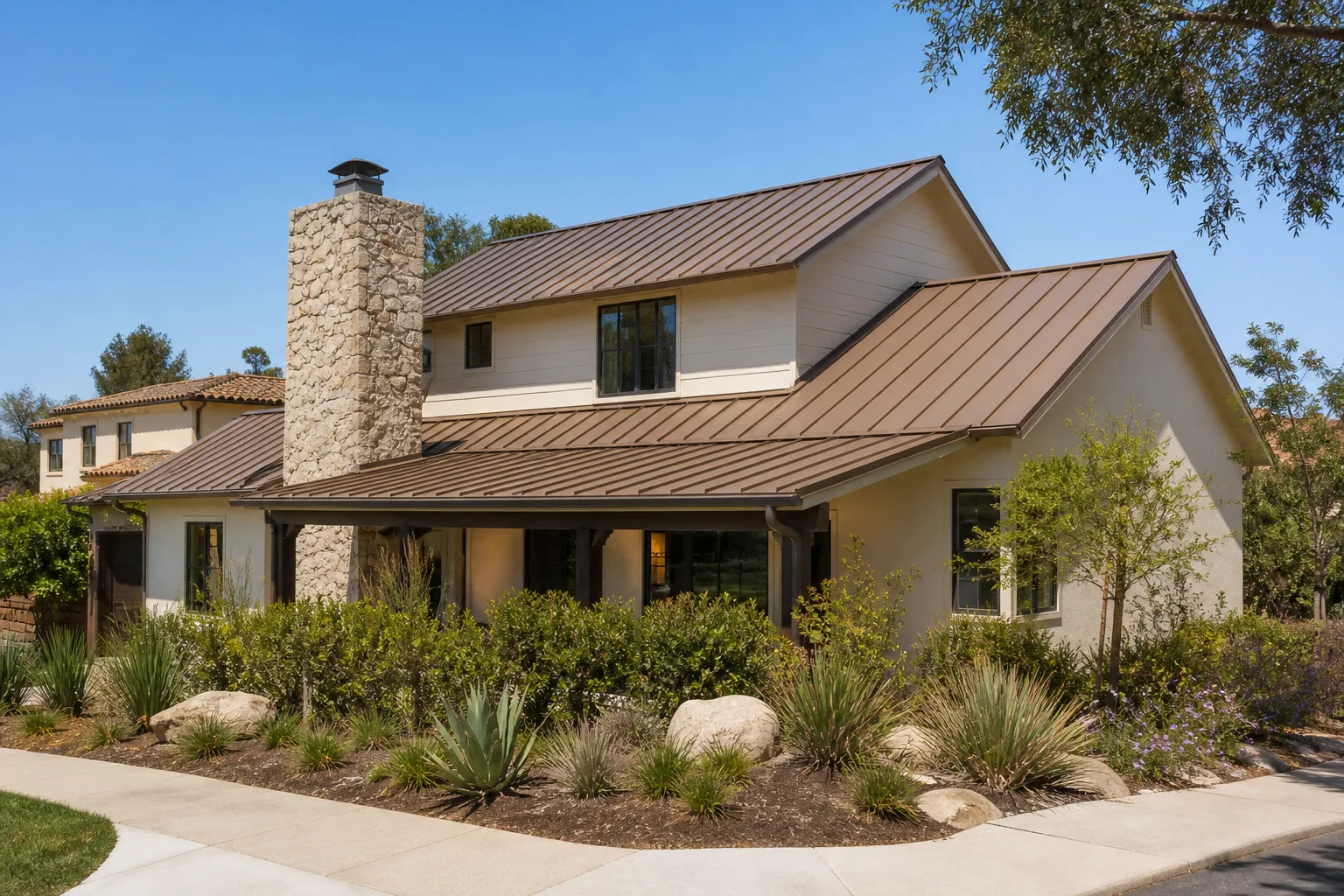
Standing Seam Metal
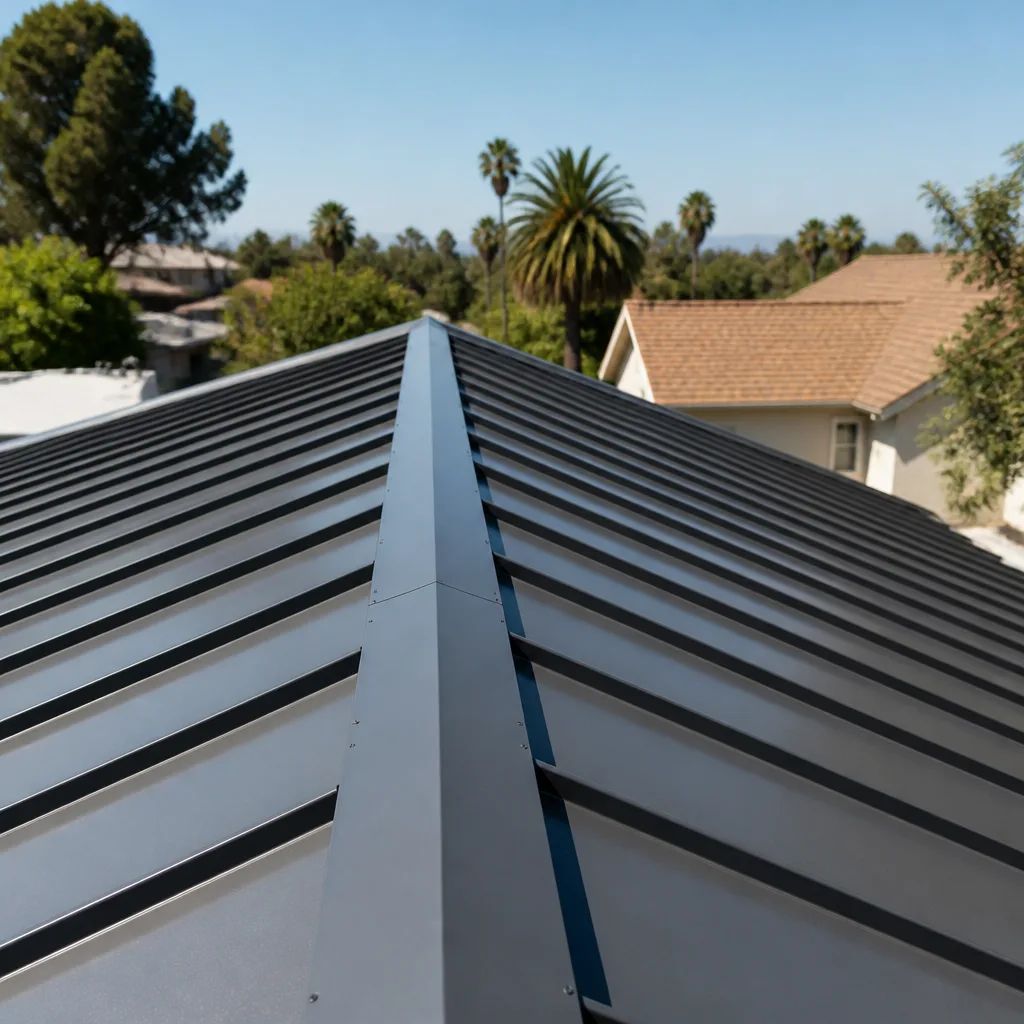
Metal roofs are durable but not invisible-failure free. Standing seam panels are attached with concealed clips and fasteners, so the things to watch for sit at the edges, seams, and penetrations. Look for:
- Rust streaks, especially at cut edges and around penetrations
- Lifted or loosening panels at the ridge or gable end
- Fastener back-out on exposed-fastener systems (lower-profile metal roofs)
- Dented or oil-canned panels from hail or impact
- Loosened sealant at end laps and side laps (which may need scheduled re-sealing)
Metal isn’t a “set it and forget it” roof. It’s a roof that asks for an inspection every couple of years, especially if you’re the original owner and past the installer’s attention. If you’re weighing a metal roof against shingle or tile, we walk Folsom homeowners through the trade-offs in our shingle roofing comparison as a starting point, because the material conversation starts with an honest side-by-side, not a single-product pitch.
Reading Your Attic in Summer: Heat Intrusion vs. Active Water Infiltration
An attic in Folsom in July is a diagnostic tool. It’s also the most underused inspection a homeowner can do. Two very different problems show up in the attic during summer, and they’re easy to confuse: heat intrusion from a failed or compromised ridge ventilation system, and active water infiltration from a roof leak. Getting the two confused leads to the wrong fix, and the wrong fix leads to a repeat call a season later.
Heat Intrusion (Ventilation Failure)
Ridge ventilation is the slotted ridge vent running along the top of your roof, working with intake vents at the soffits to create continuous airflow under the deck. When it’s compromised, the attic traps heat and the symptoms are consistent:
- The attic is dramatically hotter than the outside air, and the heat feels even across the whole space
- No visible water staining, rust, or discoloration on the rafters or deck
- Second-story rooms are noticeably warmer than the rest of the house, especially late afternoon
- Ridge vent looks crushed, blocked, or has debris buildup inside the slot
Heat problems rarely cause water damage directly, but they accelerate roof aging from the underside and stress your HVAC system.
Active Water Infiltration
Water intrusion leaves physical evidence, and once you know what to look for it’s hard to miss:
- Dark rings, staining, or water marks on rafters, deck boards, or insulation
- Daylight visible through the deck (a hard stop: call a roofer now)
- Damp or cold spots on rafters even on hot days
- Mold or mildew smell, especially during warm weather
- Staining on the underside of the roof deck concentrated around valleys or penetrations
If you find daylight, active staining, or damp wood, stop the inspection and call. That’s a structural concern, not a cosmetic one. If you find a hot attic with no staining, that’s a ventilation conversation, not a leak call. A trained roofer can look at both issues in a single visit.
Cosmetic Aging or Structural Compromise? A Folsom Decision Framework
Folsom has a lot of housing stock that’s now 15 to 25 years old. Original roofs on those homes are reaching, or have reached, the end of their reliable service life, and homeowners are being asked by contractors, insurers, and family members whether “it’s time.” The honest answer is usually somewhere in the middle. Some aging is normal and expected. Some of it is a problem. Here’s how we sort the two.
| Signal | Cosmetic Aging (Watch) | Structural Compromise (Act Now) |
|---|---|---|
| Shingle surface | Faded color, minor granule loss, uniform wear | Bare patches, widespread curling, missing shingles |
| Ridge line | Slight weathering on cap shingles | Sagging, wavy, or humped ridge |
| Flashing | Dull patina, minor surface rust | Separated flashing, gaps at penetration |
| Attic | No staining, consistent heat | Water stains, daylight, damp wood |
| Gutters | Occasional grit after heavy rain | Consistent granule shedding every storm |
| Interior | None | Ceiling stains, bubbling paint, damp walls |
A roof that shows only left-column symptoms on a 15-to-25-year-old home in Folsom is a roof to inspect annually, not necessarily to replace this year. A roof showing any right-column symptom is a roof to price now, because that problem grows and rarely gets cheaper to fix. When in doubt, the deciding question is this: is damage confined to the surface, or has it reached the deck, the framing, or the interior?
If your roof is on the replacement side of that line, our team handles both roof replacement and new roof installation, and we’re comfortable telling you the honest answer even when the honest answer is “you’ve got another five years.”
Installation Defects That Show Up 2 to 5 Years After a Replacement
The most frustrating calls we get are from homeowners whose roof is only two to five years old and already showing problems. Installed right, a new roof is a low-attention item for a decade before you’re watching for material aging. Installed wrong, the defects start surfacing somewhere in the second or third year, right around the time the original contractor becomes hard to reach. These are the specific defects worth watching for if your roof is in that age window.
- Improperly placed or missing underlayment. Underlayment goes on before the shingles or tile, and if it’s skipped in valleys, at penetrations, or across whole planes, the roof still looks fine for a season or two. Water intrusion in year two or three is often underlayment, not the surface.
- Nail placement errors. Nails driven too high, too low, or at the wrong angle on a shingle course fail to hold the shingle and create a path for water. You’ll often see lifted shingles in a scattered or angled pattern that doesn’t follow the weather direction.
- Flashing shortcuts. Step flashing along a wall or chimney is fussy work, and shortcuts here are common. Caulking instead of proper flashing, or flashing installed without the correct step and counter-flashing relationship, tends to fail within the first few rain seasons.
- Ridge vent installed without proper intake. A ridge vent needs soffit intake to function. If the soffits were blocked or no intake was installed, the ridge vent becomes a decorative slot that doesn’t actually cool the attic. Homeowners see roof aging earlier than expected as a result.
- Decking pushed without correction. Soft, rotted, or delaminated deck boards should be replaced before a new roof goes on. If they weren’t, the new shingles or tile conform to a failing deck and show waviness, cracking, or fastener back-out within a few years.
- Over-driven fasteners in tile or metal systems. In concrete tile, over-driven fasteners can crack tiles that then fail years later. In metal, over-driven fasteners crush the washer and compromise the seal, showing up as rust streaks around the fastener after a few seasons.
- Made-up material combinations. Mixing brands or products in ways the manufacturer didn’t approve can void the material warranty and cause compatibility failures. If your previous installer’s brand choices don’t match what you’re seeing under the flashings, that’s a flag.
We install across seven manufacturers, including GAF, CertainTeed, Owens Corning, IKO, Atlas, Tamko, and Boral, so we present brand options per job instead of pushing one. If you suspect your last installation used a mix that doesn’t fit together, a professional inspection can confirm it before the next rainy season.
Penetrations, Flashing, and Valleys: The First Places to Fail
If you only have time to inspect one part of your Folsom roof, inspect the penetrations. Not the shingle field, not the ridge. The penetrations, flashings, and valleys are where roughly every early leak begins, because they’re where the roof’s surface gets interrupted. A shingle plane is a continuous sheet; every vent, pipe boot, skylight, chimney, and valley is a place where that sheet was cut and sealed, and seals have a lifespan.
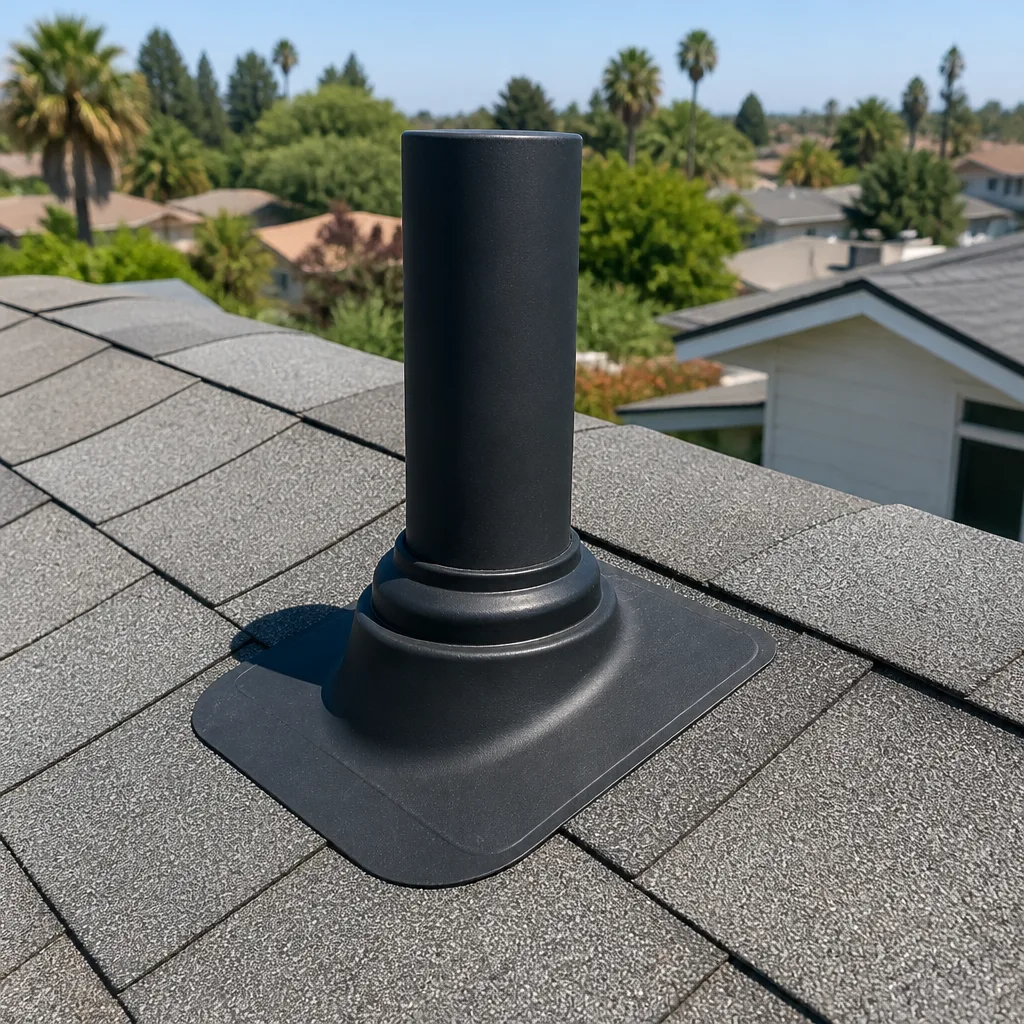
- Pipe boots: The rubber collar around plumbing vents dries and cracks after 10 to 15 years of Folsom sun. Look for cracked or missing rubber at ground level with binoculars.
- Chimney flashing: Rust, gaps, or missing counter-flashing along the chimney line. Water tracking behind the flashing shows as a stain on the chimney interior wall inside the attic.
- Skylight curbs: Cracked sealant or rust at the curb edge, often visible from inside the attic or from the exterior with a good angle.
- Valleys: Rust streaks or staining indicate valley flashing has started corroding or has lost its seal. Valleys channel most of the roof water, so small failures here cause big interior problems.
- Step flashing: Where a roof plane meets a vertical wall, step flashing should be woven into the shingle course. Lifted or missing steps are a common early leak.
Also look for anything added to the roof that shouldn’t be there: satellite mounts, solar mounts, or attached equipment whose fasteners weren’t properly sealed when they went in. Every one of them is a candidate penetration. If you’re not sure what you’re seeing, our team can inspect it, and if the roof is approaching replacement we’ll include the flashing scope in the estimate alongside the shingles, tiles, or panels themselves.
A Seasonal Watch Calendar for Folsom’s Climate
Folsom’s roof-watching calendar is driven by two things: the long, hot summer, and the first substantial fall rain. Between them, the roof shifts from being aged by heat to being tested by water. Here’s how the year breaks down and what to watch for in each stretch.
- Late summer, before the first fall rain. Do your ground-level inspection now. Shingle granule loss, cracked tiles, rust streaks, and any summer staining are clearest when the roof is dry. If you plan an inspection with a professional, doing it before the rain gives you time to schedule replacement work before the wettest months.
- First significant fall rain. Walk the perimeter and check the gutters. This is when granule load shows up in gutters and at downspout feet, and when any interior stains appear on ceilings and walls. Note the locations and take pictures.
- December through February rain months. Continue watching for interior ceiling and wall stains. Any new interior stain is worth an inspection. Winter is mild here, so this isn’t a freeze-thaw story; it’s simply the period when the roof gets its heaviest water testing.
- Late spring. Post-rain check again, and inspect the attic on a hot afternoon. Heat intrusion symptoms (consistent heat, no staining) vs. water intrusion symptoms (staining, daylight) are easiest to distinguish in summer.
- Anytime after a wind event or storm. Walk the yard for shingle tabs, tile pieces, or metal debris. Missing material is an immediate call.
When Warning Signs Mean Repair and When They Mean Replacement
Not every warning sign points to a new roof. Some point to a specific fix, some to a monitoring schedule, and some to replacement. The distinction matters because recommending a full replacement for what is fairly described as a localized problem is the single biggest trust issue in this trade.
Warning signs that typically point to repair:
- Isolated shingle damage from a single storm or impact
- A failed pipe boot or a single penetration flashing
- A cracked tile or two in an otherwise sound tile field
- A popped fastener on a metal panel that can be re-secured
- A single valley with early rusting but no interior staining
Warning signs that point to replacement:
- Widespread granule loss with bare patches across a whole plane
- Multiple failed penetrations at the same age, indicating the roof system has aged out
- Active interior water stains at multiple points, or daylight through the deck
- A roof that’s 20-plus years old and showing right-column symptoms from the framework above
- Underlayment failure on a tile roof (which usually requires removal and reinstall of tile over new underlayment)
When replacement is warranted, Folsom homeowners who choose metal, tile, or shingle are choosing among genuinely different systems. Our Folsom Roofing Pros team walks through that comparison in the estimate itself, not as a sales step. We’d rather you understand the material trade-offs, including manufacturer warranty coverage, than sign before you do.
Common Mistakes to Avoid
- Climbing up to “take a look.” A homeowner on a wet or dry roof is the biggest safety risk in the whole inspection. Ground level is where the inspection belongs.
- Assuming dark granules in the gutter mean the roof is done. A handful of grit after a storm is normal. Consistent flow every rain, with bare shingle patches, is the real signal, and context matters.
- Ignoring a single interior ceiling stain because it “isn’t growing.” Folsom’s rainy season gives small leaks plenty of time to do a lot of damage slowly. Any new interior stain deserves a professional look.
- Treating heat in the attic as a leak problem, or a leak problem as a heat problem. The two have different fixes. Staining means water. Consistent heat without staining means ventilation.
- Judging a roof by the shingles alone. On a tile roof the shingles aren’t the issue, the underlayment is. On a metal roof the panels aren’t, the fasteners and sealants are. Judge the right component.
- Taking “you need a full replacement” at face value without a second look at the flashing and penetrations. Localized problems can look widespread from the top; a specialist will separate them honestly.
- Assuming a recent installation is safe. Nail placement, underlayment, and flashing defects show up in the second through fifth year. A roof isn’t proven by its install date, it’s proven by how it handles its first few rain seasons.
See the difference
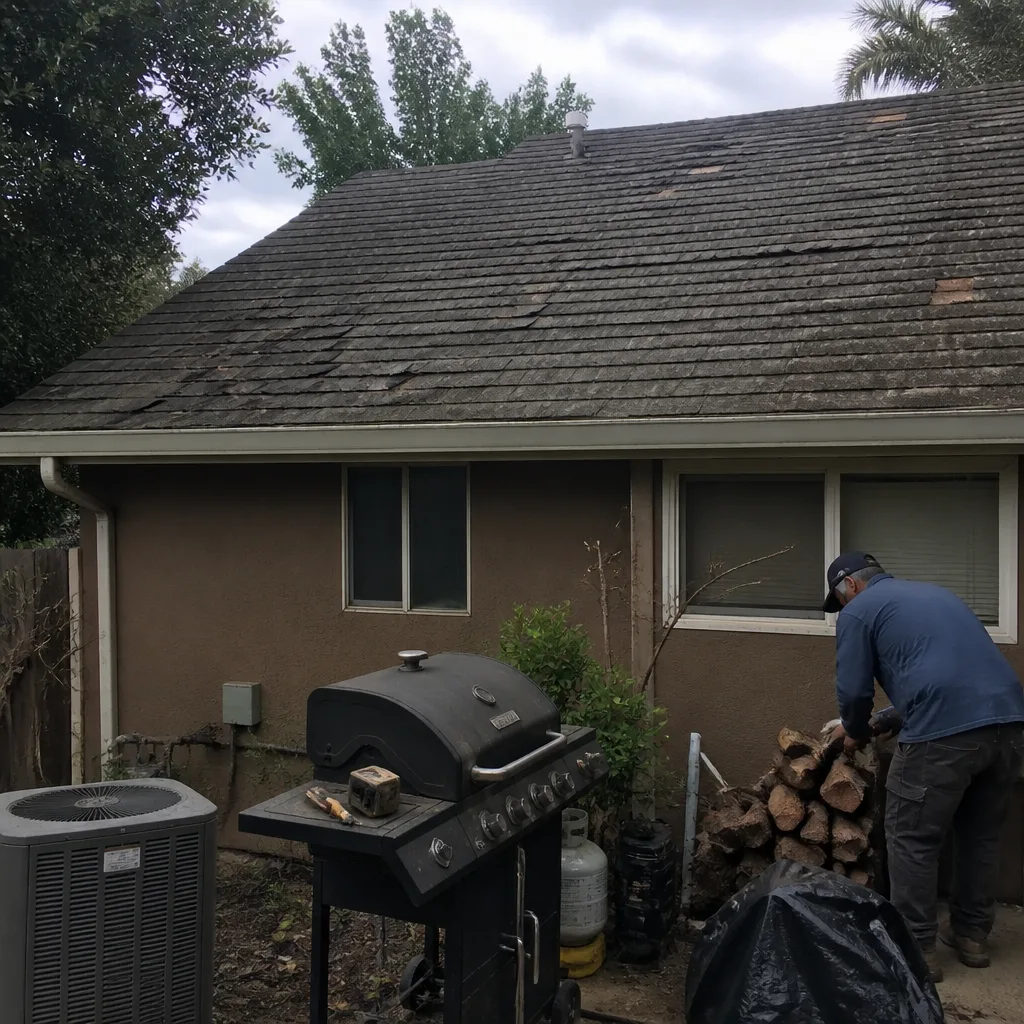 Before
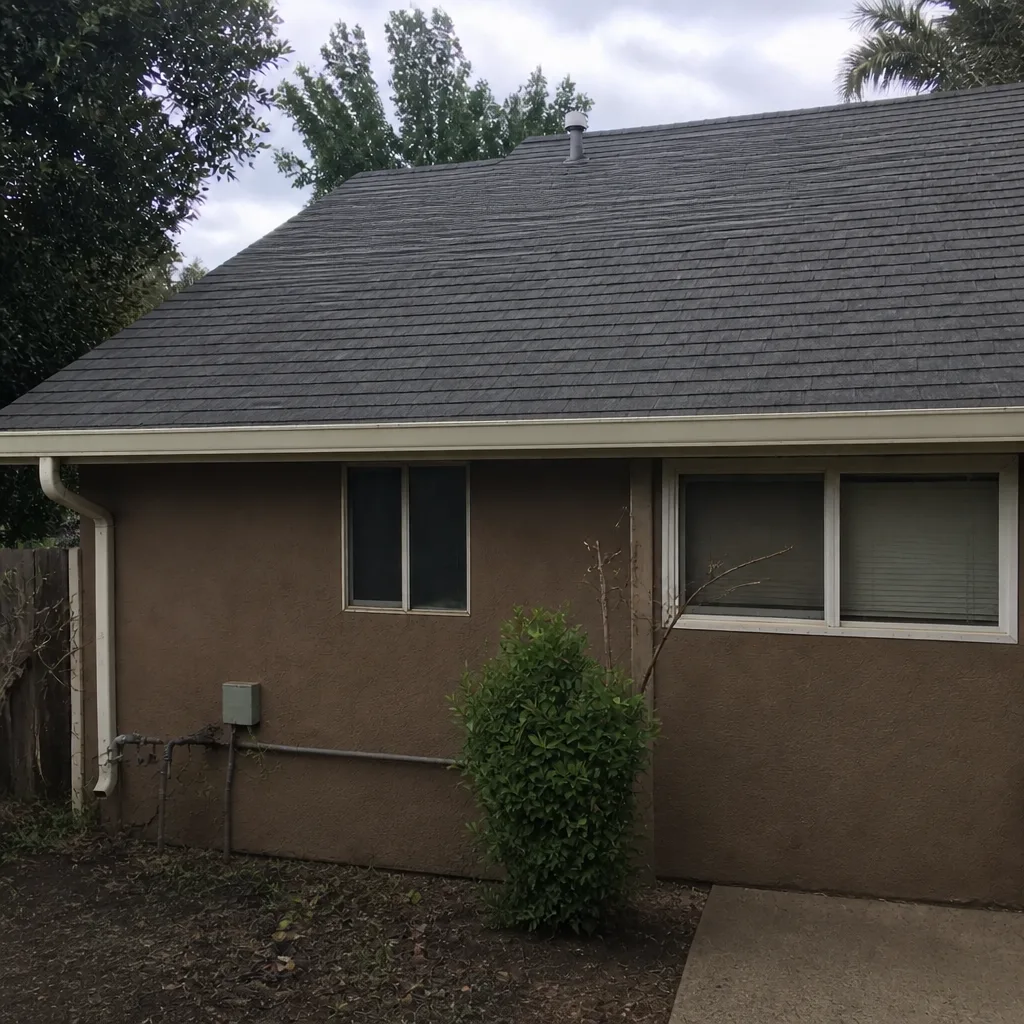 After
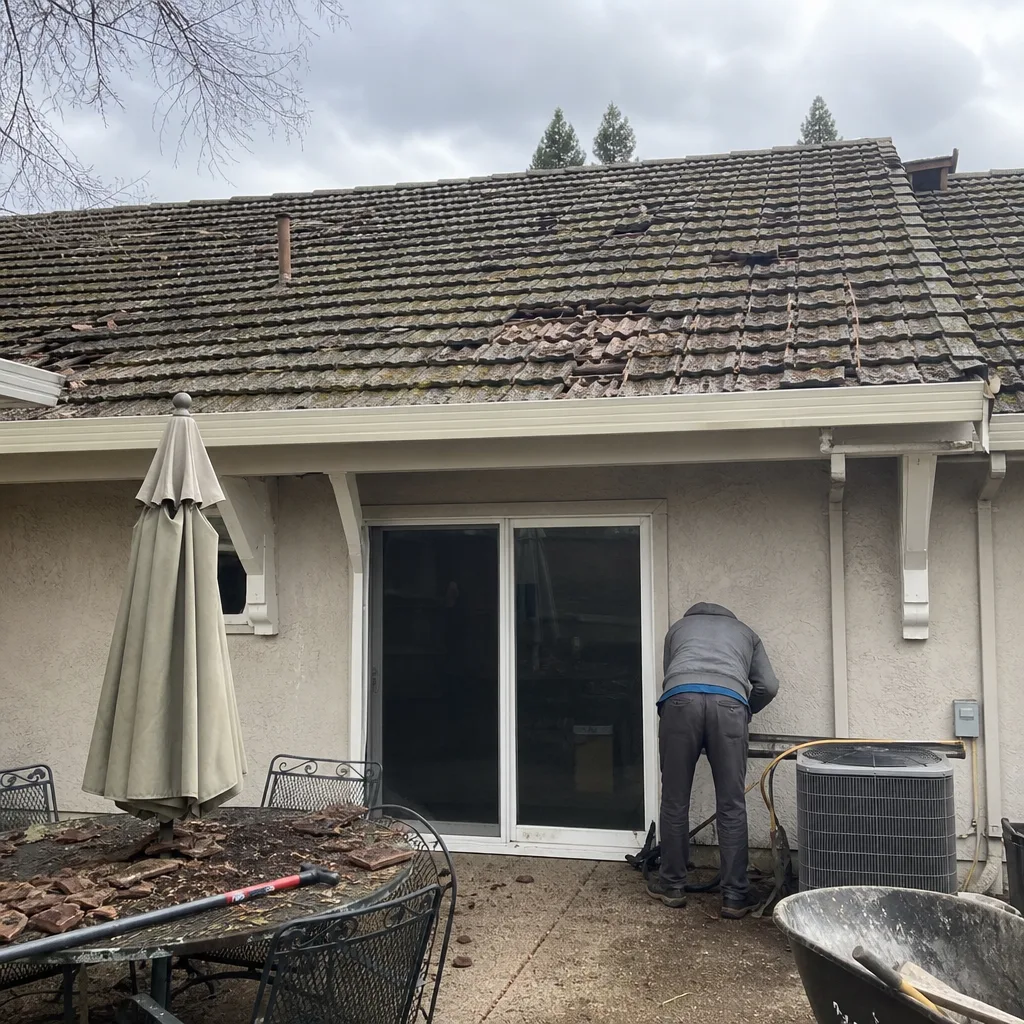 Before
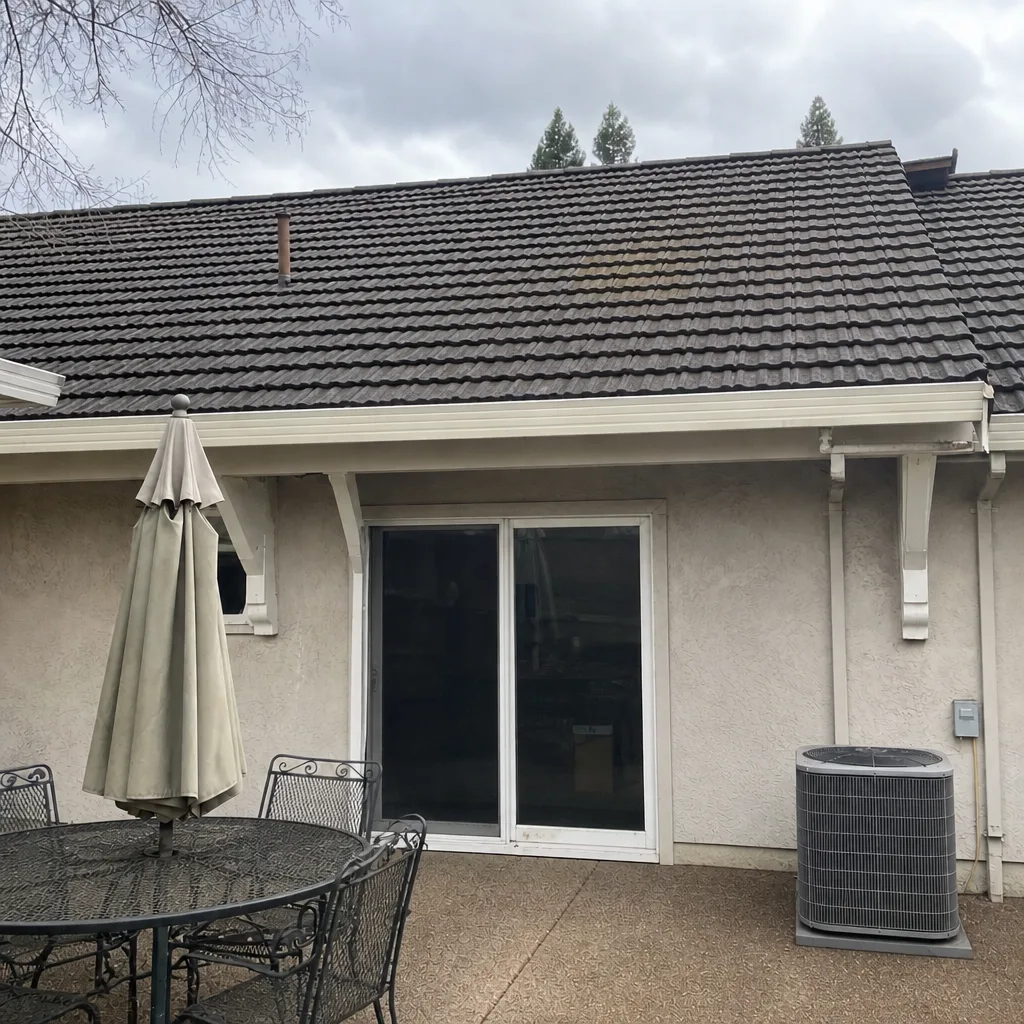 After
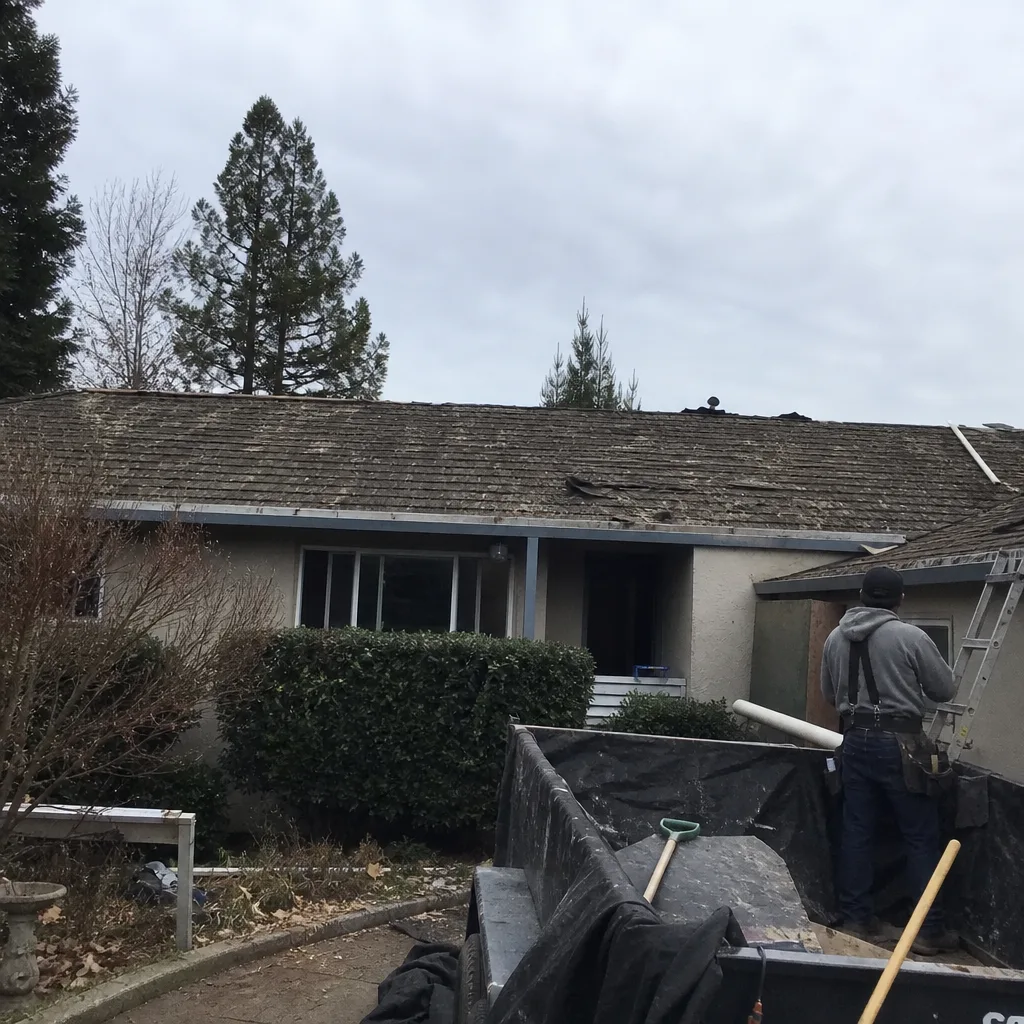 Before
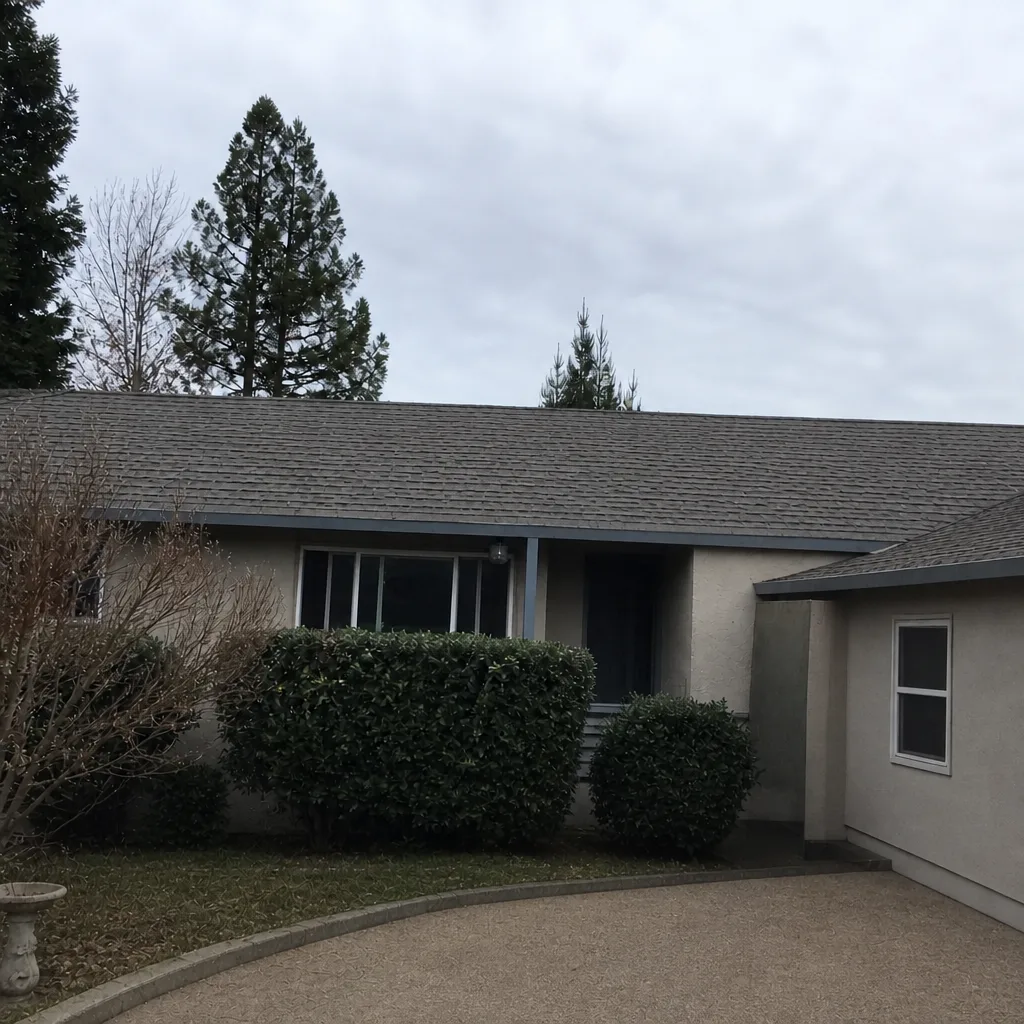 After
When to Call a Professional
Call a professional today if you find daylight in the attic, active water staining on rafters or ceilings, a sagging or visibly wavy ridge line, or any missing roof material after a storm. Those are structural-level concerns that don’t get safer or cheaper by waiting. Call for an evaluation if you have consistent granule loss in your gutters, widespread shingle curling, multiple failed flashings, or a roof in the 15-to-25-year range showing more than cosmetic symptoms. If your attic is consistently hot in summer with no staining, that’s also worth a call, but the conversation is about ventilation, not leaks.
Folsom Roofing Pros offers free estimates in Folsom – call (279) 321-0981. We answer 24/7. Fast dispatch from 7am to 7pm, Sunday through Friday. Our technicians have up to 10 years of experience, they install shingle, tile, and metal systems from trusted manufacturers like GAF, CertainTeed, and Boral, and every estimate is a written, line-item quote that sets the price. The professional who comes out is licensed and insured as the state requires, and the estimate is free.
Frequently Asked Questions
You can tell a Folsom roof is likely due for replacement when it shows widespread granule loss with bare patches, multiple failing penetrations, visible sagging, or active interior water stains on a roof that’s 20-plus years old. A roof showing only isolated or cosmetic symptoms is usually a repair or monitoring case, not a full replacement. Get a professional inspection to separate the two before committing.
Granule loss in your gutters means your asphalt shingles are shedding their protective mineral surface, which is normal in small amounts after storms and a warning sign in larger amounts. A handful of grit after a heavy rain is expected. A steady stream every rain, plus visible bare patches on the shingle surface, means the shingle is past its protective layer. Call (279) 321-0981 for an inspection if you’re seeing the latter.
No. A 20-year-old roof is at the age where replacement becomes plausible, not where it’s automatically needed. What matters is condition, not age: granule loss pattern, flashing condition, attic evidence, and interior staining all decide the answer. A 20-year-old roof in good condition can reasonably be monitored for several more years.
Heat intrusion shows up as consistent attic heat without staining, and typically points to a ventilation problem like a compromised ridge vent. A roof leak shows up as staining, discoloration, damp wood, or daylight through the deck, and points to a water infiltration problem. The two have very different fixes, so diagnosing the right one saves real money.
You can tell a previous installer cut corners when you see nail placement errors, missing or improper underlayment, caulked-instead-of-flashed penetrations, or unapproved brand mixing in the second through fifth year after installation. These defects typically show up as scattered lifting, rust around fasteners, or leaks at penetrations. A professional inspection can confirm whether what you’re seeing is an installation defect or normal aging.
No. Shingles fail from the top down through granule loss and surface aging. Tile fails more often at the underlayment beneath the tile or at cracked and displaced tiles. Metal fails at the fasteners, sealants, and cut edges. On any roof material, an inspection should be material-specific.
The Bottom Line
The warning signs that matter most are almost always visible from the ground before they become catastrophes, and they’re read differently depending on whether you have shingles, tile, or metal overhead. A 10-minute perimeter walk twice a year, an attic inspection each summer, and a habit of checking the gutters after every heavy rain will surface problems while they’re still repairable. Cosmetic aging on a 15-to-25-year-old Folsom roof is normal. Structural symptoms aren’t, and neither are contractor defects hiding in the second through fifth year. If you’re not sure which you’re seeing, that’s the moment for a professional opinion, not another glance from the driveway.
Call Folsom Roofing Pros at (279) 321-0981 for a free estimate. We answer 24/7. Fast dispatch from 7am to 7pm, Sunday through Friday. We work with seven manufacturers so you choose the material that fits your home, and every recommendation is written, itemized, and honest about the difference between a repair and a replacement.
Written by the team at Folsom Roofing Pros.