
Top Signs You Need Roofing Service – Don’t Ignore These
By the time you see a water stain on your ceiling, the decking underneath may have been rotting for a year and a half. The warning signs that actually matter show up long before that – and they look nothing like what you’d expect. The short answer: watch your shingles for granule loss and thermal cracking, watch your attic in October for moisture and daylight, and watch your wall-to-roof transition where stucco meets shingle. If any of that sounds like a job you’d rather not climb a ladder to investigate, call (279) 321-0981. Estimates are free and there’s no pitch attached.
Here’s what we’ve learned inspecting roofs around Folsom and what those early indicators actually mean.
Why the Obvious Signs Are the Wrong Ones to Watch

Most roofing articles tell you to look for missing shingles and visible leaks. Both are real, but by the time either shows up you’re past the early-warning stage and into damage control. Missing shingles mean the fasteners have already failed. A ceiling stain means water has been traveling down a rafter for months. These are late symptoms, not signs.
The signs worth your attention are quieter. They’re the ones that show up 12 to 18 months before a leak ever reaches your living space:
- Granules collecting at the base of a downspout
- Hairline cracks across shingle faces after summer
- Daylight visible through the roof deck from your attic
- Rippling or lifting at the valley where two roof planes meet
- Caulk lines pulling away where stucco meets shingle
Folsom homeowners sit in a climate that stresses shingles in a very specific pattern: dry, brutal summers followed by wet winters. That cycle is harder on a roof than steady weather anywhere else in California, and it produces failure signatures you won’t read about in a generic guide.
If you’d rather have a trained eye look than spend an afternoon on a ladder, a roof replacement assessment is the honest way to find out whether you need one or not. We’ll tell you if you don’t.
Thermal Cracking and Granule Loss: Folsom’s Signature Damage
Folsom’s summers routinely cross 100°F, and then the wet season arrives and the roof takes on water. Shingles expand in the heat and contract when temperatures drop. Repeat that cycle a few hundred times and the asphalt mat starts to fatigue.
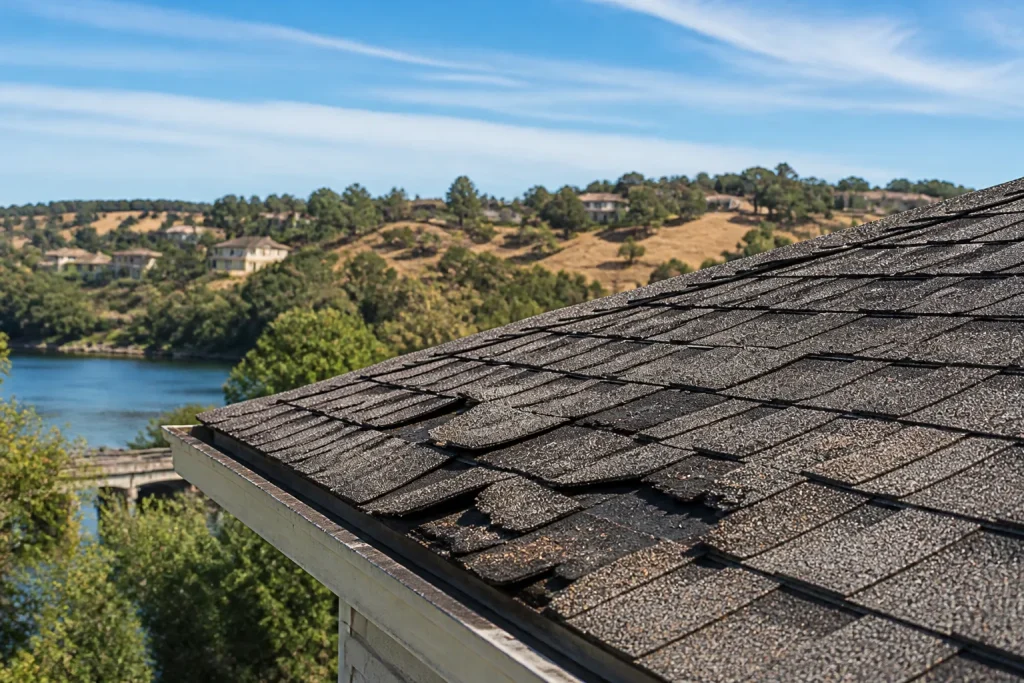
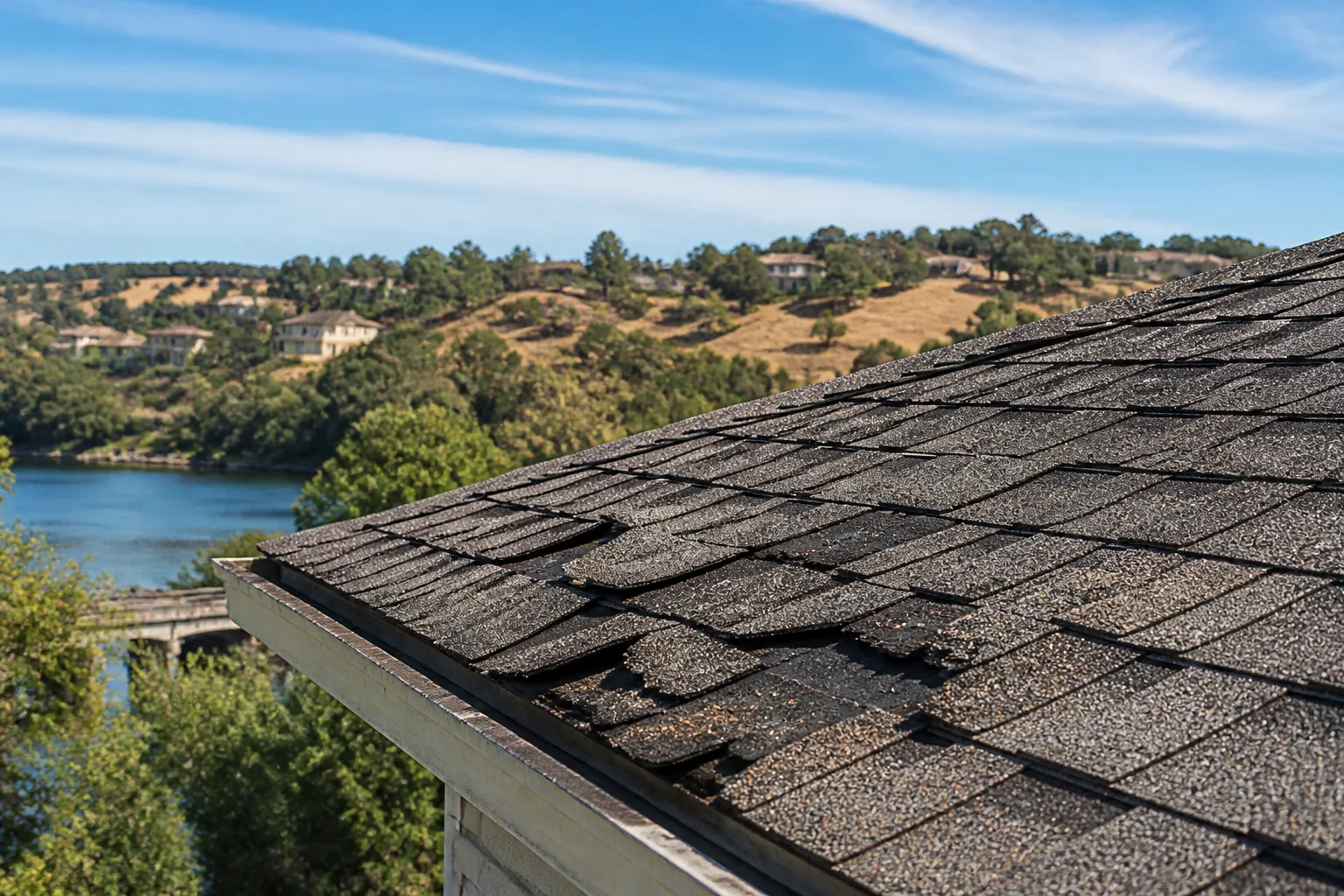
That’s thermal cracking. You’ll see it as short, straight cracks across shingle faces, often running perpendicular to the long edge. They look cosmetic at first. They aren’t – each crack is a path for water to reach the mat underneath.
Granule loss is the other half of the story. Those little granules aren’t decoration; they’re the shingle’s UV shield. When they start washing away, the asphalt underneath gets exposed and degrades fast.
Here’s the difference from coastal California shingle wear: coastal roofs degrade slowly and evenly because the temperature swing is mild. Folsom roofs degrade in bursts. A hot September can take a season’s worth of life off a shingle in one stretch. That’s why a roof at year 15 in Folsom can look dramatically worse than a roof at year 15 in San Diego.
If your shingles are past saving, shingle roofing with a name-brand system from CertainTeed or Owens Corning holds up better to this cycle than value-tier product, and the difference shows up around year 12, not year 2.
The Gutter Test: What Your Downspout Tells You
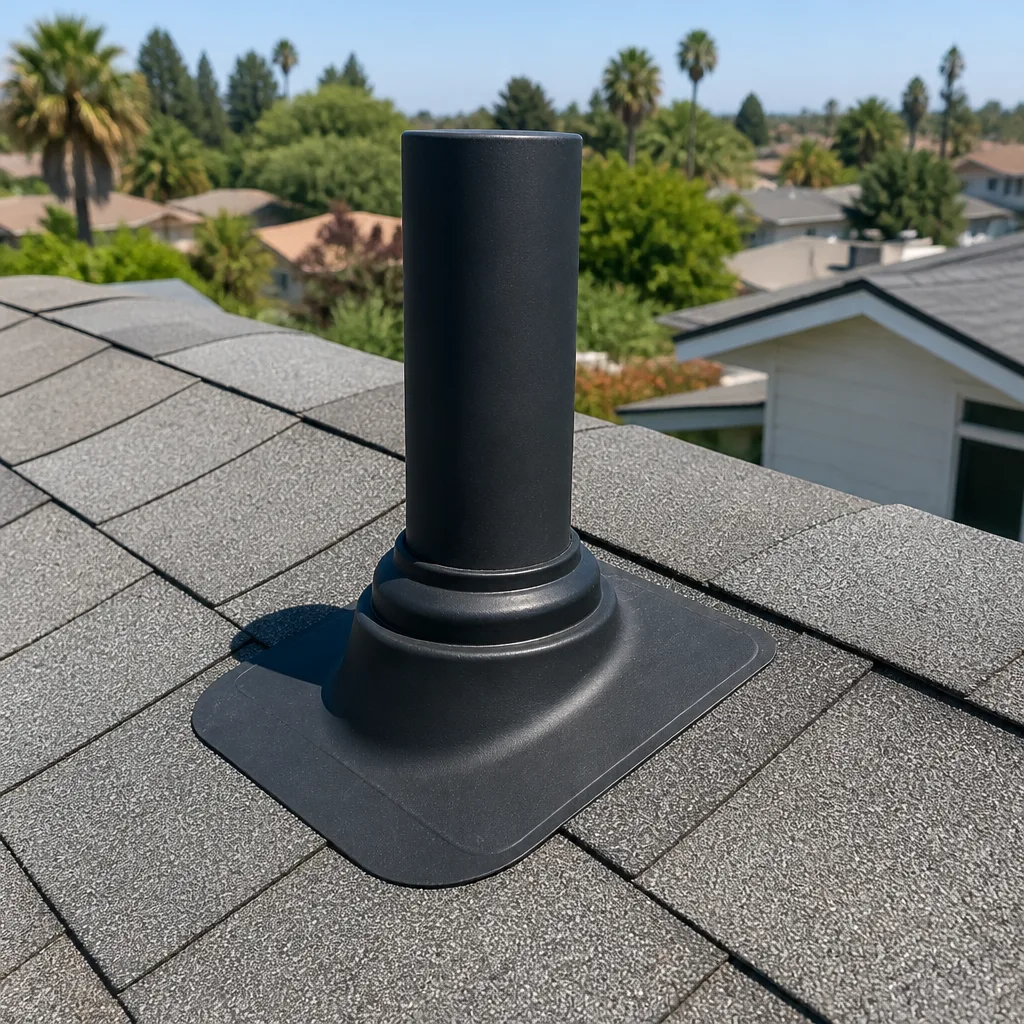
This is the simplest diagnostic you can run yourself, and almost nobody does it. After a dry stretch, clear the debris out of one gutter run and put a bucket or a flat pan under a downspout. Then run a hose into the gutter for a couple of minutes and look at what comes out.
A small amount of grit is normal. What you’re looking for is volume and color:
- A light sprinkle of granules: shingles are aging normally, no action needed.
- A steady pour of dark grit: you’re losing the UV shield faster than you should be, and the shingles are entering their last stretch.
- Granules plus sand-textured material: that’s likely the shingle mat itself breaking down. The roof is close to the end of its service life.
Do this test in September, right before the wet season. What you find tells you whether you have another winter of margin or whether you should be planning a replacement now rather than after a leak. A second test in early spring shows you how much you lost over one rainy season – that rate of loss is often more useful than the raw volume.
For homeowners who want to understand what’s driving the loss, we install IKO and Atlas systems alongside the premium lines, so you can see the difference in granule retention between tiers before you commit.
Your Attic in October: The Check Nobody Does
Before the first real rain of the season, get into your attic with a flashlight. This one inspection can save you thousands, because everything that’s wrong with a roof shows up here first.
Three things to look for:
- Moisture staining on the underside of the sheathing. Dark rings, tide lines, or soft spots in the wood. Any of those mean water has already been getting in – even if you’ve never seen a drip.
- Daylight gaps. Turn off the flashlight and look up. Pinholes of daylight are normal at vents. Daylight coming through the field of the deck is not. That’s a fastener or sheathing failure.
- Compressed insulation. Insulation that’s been flattened, damp, or matted down against the deck usually means moisture is sitting in it. That’s a slow leak you haven’t found yet.
Do this check in October, before the rains start. Finding a problem in dry weather means you can plan. Finding it in February means you’re calling someone in a hurry, and that’s never the position you want to be in.
If you spot any of the three, that’s the moment to call. Our technicians have up to 10 years of experience reading exactly these signs, and a new roof installation assessment will tell you whether the sheathing is salvageable or whether you’re looking at a full tear-off.
Valley Creep: Why the Corners Fail First
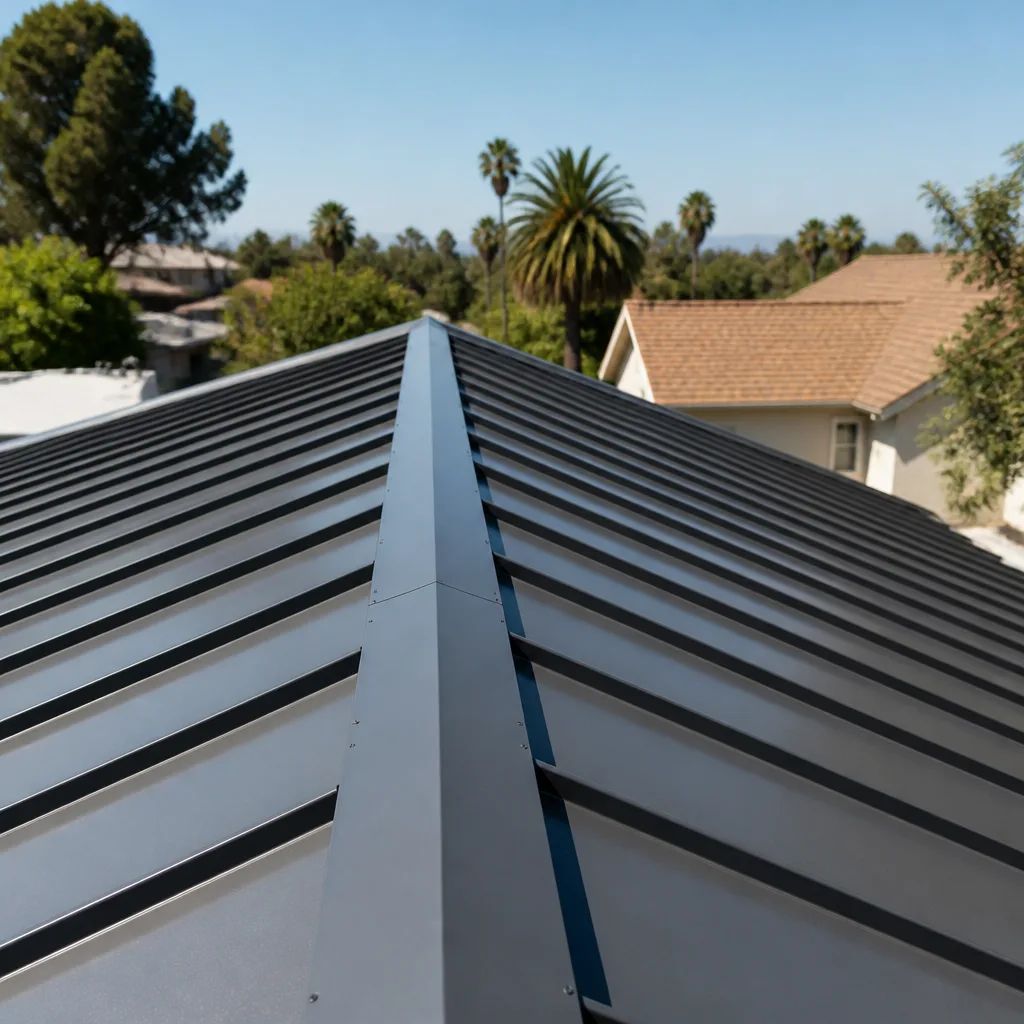
Folsom’s valley areas – where two roof planes meet and channel water – fail before the flat field shingles every time. It’s not close. The valley gets double the water volume of any other part of the roof, and it’s the hardest place to install correctly.
“Valley creep” is what we call the pattern of failure that starts at the valley and works outward. From the ground, it looks like:
- A visible seam or gap running down the center line of the valley
- Shingle edges lifting or curling along both sides of the valley
- Rust streaks or dark staining running downhill from the valley
- Moss or algae growth concentrated in the valley and nowhere else
Any of those visible from the ground means the valley flashing has likely already failed. Because the valley handles so much water, a compromised valley can put hundreds of gallons into your decking over one winter. It’s the single most common cause of premature decking rot we find on Folsom roofs.
The good news: valley failures caught early are usually contained to a small section. Caught late, they mean a full tear-off of the surrounding area. That’s the difference between a targeted fix and a bigger project, and it comes down to when someone looks.
Stucco-to-Roof Transition: The Flashing Failure You Never See
Most Folsom homes have stucco walls, and where the stucco meets the roof – that transition line just above the gutter – is where water quietly gets in. Homeowners almost never look there until there’s a stain on the interior wall.
By that point, the repair is usually an interior drywall and paint job, not just a flashing fix. The exterior work is modest. What it damages inside is not.
What to look for at the wall-to-roof transition:
- Caulk pulling away from the stucco or the shingle: the seal has broken and water is getting behind it.
- Hairline cracks in the stucco running down toward the roof: a sign that the flashing has been moving under thermal stress.
- Paint or stucco peeling along the transition line: water is trapped behind the finish.
- Dark staining on the wall just above the roof line: ongoing moisture that hasn’t reached the interior yet.
This transition needs to be checked on every roof, every year. It’s the single spot where a small flashing repair prevents a large interior job. Any roofer who doesn’t look at it during an inspection is skipping the most important part of the roof.
When to Call a Pro
If you find one from the list above, it’s worth a look. If you find two or more, it’s worth a full inspection. And if you’re finding signs during the wet season instead of before it, call us rather than waiting for spring – water damage compounds over weeks, not months.
We work with seven name-brand manufacturers – CertainTeed, Owens Corning, IKO, Atlas, GAF, Tamko, and Boral – so the recommendation you get is driven by the job, not by what’s sitting in a warehouse. Shingle, tile, or metal, replacement or new build, the estimate is free and the written quote sets the final price.
Related services in Folsom: Folsom Roofing Pros specializes exclusively in roof replacement and new roof installation – not general repairs or exterior work – so if a full replacement is where your inspection points, that’s exactly what we do.
The Bottom Line
The signs that matter most on a Folsom roof are the ones that show up quietly: granule loss in the downspout, thermal cracks after a hot summer, daylight in the October attic, valley creep visible from the ground, and caulk failure at the stucco transition. Catch any of them early and you’re looking at planning a replacement on your own schedule. Miss them and you’re looking at water damage, decking rot, and an urgent call in the middle of the rainy season.
The roof protects everything else in your home. It deserves more than a glance once a year. If you’re in Folsom and need help, Folsom Roofing Pros offers free estimates – call (279) 321-0981. We answer 24/7. Fast dispatch from 7am to 7pm, Sunday through Friday.
Frequently Asked Questions
It depends on how much of the roof is affected and whether the sheathing underneath is still sound. A single failing valley or a broken flashing at the stucco transition is a targeted fix. Granule loss across multiple roof planes plus thermal cracking in the field shingles usually means replacement. A free inspection settles it in about an hour.
Granules are the small, rough particles coating the shingle surface. When they start washing into your gutters and downspouts in visible amounts, the shingle has lost part of its UV protection. Light granule loss is normal aging. Heavy, dark, steady granule flow after a hose test means the shingles are in their final stretch and worth an inspection before the next wet season.
Not always, but it’s the place to start. Ceiling stains in Folsom homes most often trace back to a valley failure, a flashing gap at the stucco transition, or a sheathing gap above. By the time a stain appears, the underlying problem has typically been active for months. Call (279) 321-0981 and we’ll find the source rather than guessing at it. Estimates are free.
Twice a year is the honest answer. Once in October before the wet season, covering the attic, the valley from the ground, and the stucco transition. Once in early spring after the rains, mostly to see how much granule loss happened over winter. Between those two checks, a quick glance after any major wind event covers the rest.
Written by the team at Folsom Roofing Pros.
Need Roofing Help?
Call Folsom Roofing Pros - the local pro we connect you with is licensed and insured, here with fast help in Folsom.
(279) 321-0981